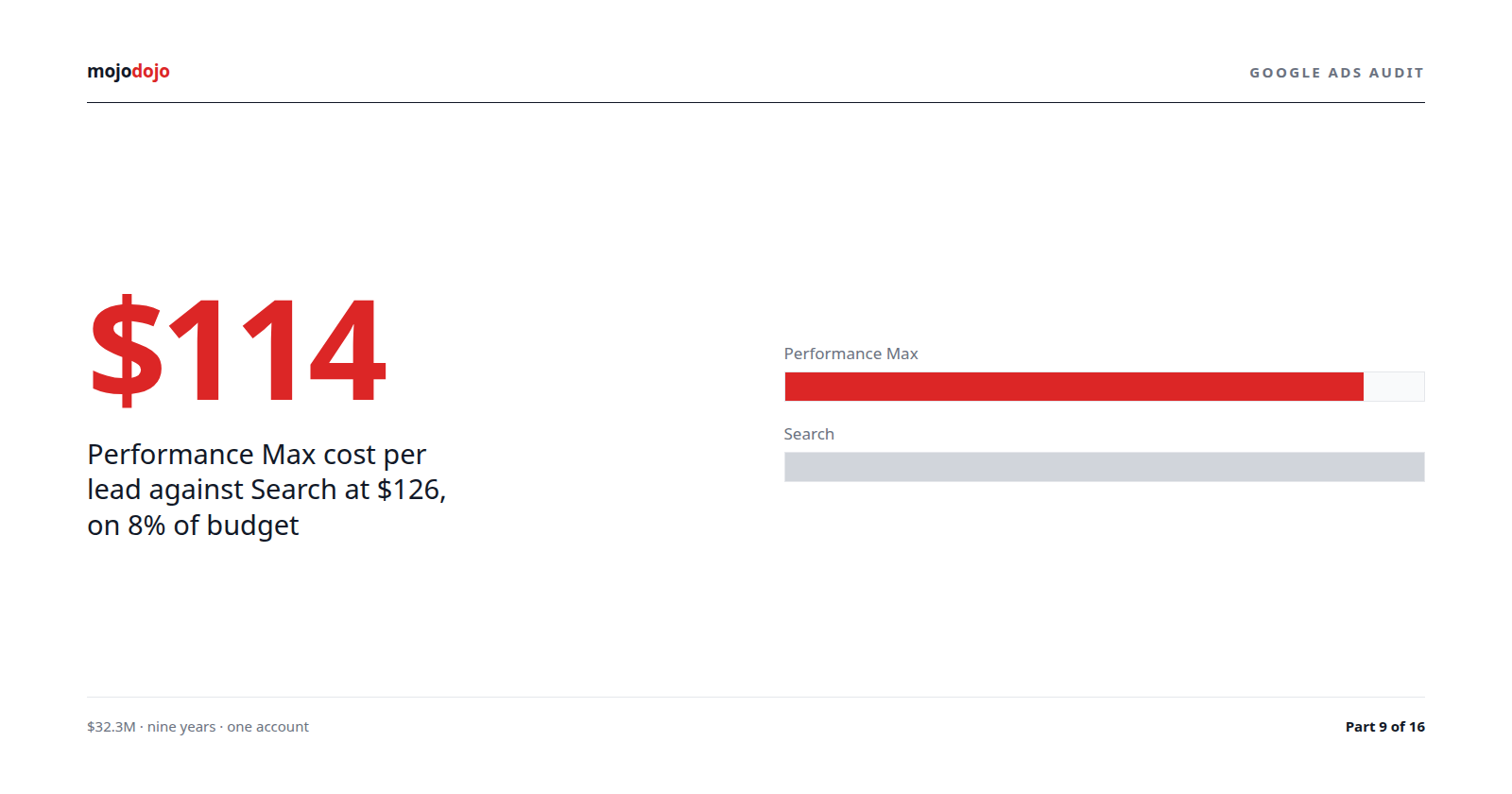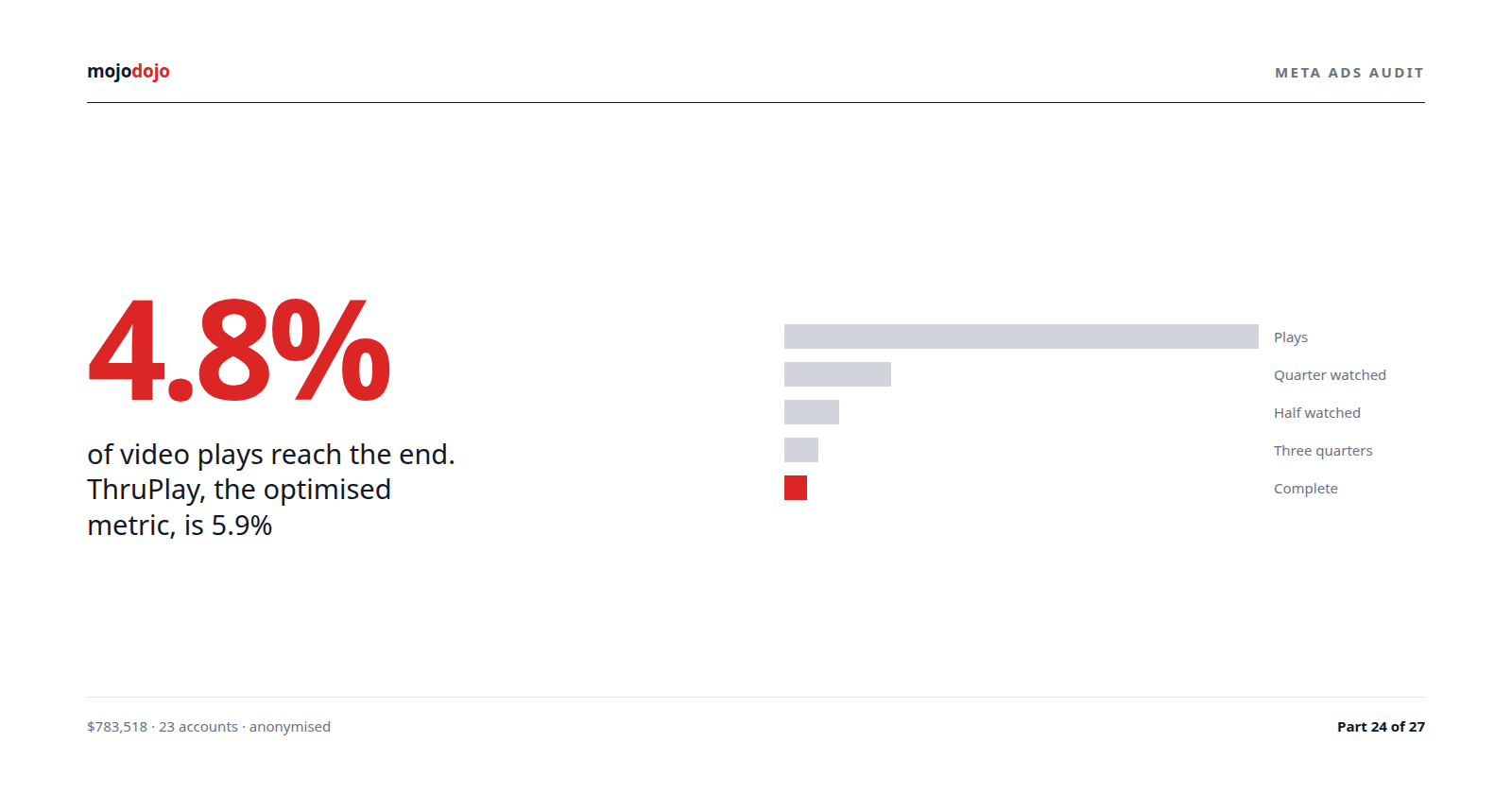
Google Ads Target CPA needs ~30 conv/month per campaign. SKAGs give it 2–8
The single-keyword ad group was the dominant account structure of the 2010s. One keyword per ad group, an ad written specifically for it, a landing page to match. The logic was control: relevance scores up, wasted clicks down, every impression served by an ad that named the exact thing searched for. It worked, under manual bidding, when exact match meant exact.
Smart bidding wants the opposite. Target CPA, Maximise Conversions and their relatives set bids from a model of what converts, and the model is trained on the conversions the campaign has produced. Google's guidance, and the observed behaviour, is that a campaign needs somewhere around 30 conversions in 30 days before the model is stable enough to trust.
You cannot fragment conversions into hundreds of tiny ad groups and campaigns and also pool them into one learning signal. The two structures pull in opposite directions, and the tension is not resolvable by being clever.
What the account looked like
Metric | Value |
|---|---|
Campaigns that have ever spent | 507 |
Campaigns currently enabled | 16 |
Brand ad groups, paused | 44 of 45 |
Highest-volume campaign, conversions per 30 days | 33 |
Five hundred and seven campaigns is what a decade of SKAG-adjacent thinking looks like. Every state, every category, every match type, every landing page test got its own campaign. Each one made sense on the day it was built. Collectively they spread the account's conversions so thin that almost none of them ever had enough signal to run smart bidding.
The highest-volume campaign (the one that consolidated most of the battery traffic for one state), sits at 33 conversions a month. That is the threshold, exactly. One bad week takes it under.
The arithmetic of splitting
Here is what a campaign experiment does to that number:
Before | 50/50 experiment | |
|---|---|---|
Conversions per 30 days, base campaign | 33 | ~16 |
Conversions per 30 days, trial campaign | n/a | ~16 |
Either arm above the smart-bidding threshold | Yes, barely | No |
And here is what a SKAG structure does to it, at the same total volume:
Structure | Campaigns | Conversions per campaign per month | Smart bidding viable |
|---|---|---|---|
Consolidated by intent (battery / panel / quotes × state) | ~12 | 20–35 | Marginally |
Consolidated by intent, states merged | ~4 | 60–100 | Yes |
SKAG, one campaign per keyword theme | 50+ | 2–8 | No |
Same conversions. Same spend. Whether the algorithm has anything to learn from depends entirely on how many boxes you divided them into.
The two coherent positions
Position one: stay manual, keep the structure. Tight ad groups, exact match, hand-set bids, negatives maintained weekly. This works. It worked for this account for years at $92–$134 per lead. It requires someone competent to run it continuously, and it does not benefit from the platform's automation, which is fine, if that's the choice.
Position two: consolidate, go automated. Fewer campaigns, organised by intent rather than keyword. Ad groups still tight: the SKAG ad group is fine; it's the SKAG campaign that starves the model. Let the bidding algorithm allocate across ad groups within a campaign that has enough conversions to teach it something.
Manual + SKAG | Automated + consolidated | |
|---|---|---|
Control over individual bids | Full | None |
Conversion pooling | Not needed | Required |
Ongoing labour | High | Low, once stable |
Where the leverage is | Negatives, bids | Structure, conversion tracking |
Fails when | Nobody maintains it | Conversions < 30/month, or tracking is inflated |
Both positions work. The position that does not work is the common one: a SKAG-era structure with smart bidding switched on, campaign by campaign, each one at 8 conversions a month, each one's algorithm guessing.
The evidence from this account
When one battery campaign was tested (Manual CPC control against Target CPA treatment, 60/40), the automated arm won decisively: $152 per lead against $416, p = 0.009. That campaign had enough volume to make the test readable.
A parallel test on a panel campaign showed the control winning. That campaign had eleven clicks in the trial arm after three weeks. It wasn't that Manual CPC was better for panel; it was that the trial arm never had enough conversions for the algorithm to learn anything, so it lost by default.
That is the SKAG problem in miniature. The tool wasn't wrong. The box was too small.
What consolidation is not
It is not "put everything in one campaign." Intent still has to be separable, because budgets, targets and landing pages differ. Battery and panel convert at different costs and deserve different targets. Brand needs its own campaign for reasons covered elsewhere.
It is also not "abandon tight ad groups." The relevance benefit of a focused ad group is real and survives consolidation intact. The change is at the campaign level: one battery campaign with eight tight ad groups, rather than eight battery campaigns with one ad group each.
Keep | Change |
|---|---|
Tight ad groups, 5–15 keywords sharing intent | Campaign per keyword theme → campaign per intent × geography |
Exact match as the primary match type | Separate campaigns per match type → match types within ad groups |
Ad copy specific to the ad group | Landing page tests via ad variations, not campaign clones |
Brand isolated | Everything else pooled to the threshold |
The uncomfortable part
Consolidation means deleting or pausing structures someone built deliberately, often recently, sometimes yourself. It looks like giving up control. In one sense it is. You are handing bid decisions to a model.
But the alternative in most accounts is not "control." It is a smart-bidding algorithm running on 6 conversions a month, making decisions with no information, while the account manager believes the structure is protecting them. That is the worst of both. Pick one.