

Auckland Shopify Development Company
Auckland Shopify development for New Zealand brands selling locally and across the Tasman from one storefront. Multi currency and freight rules quietly break more checkouts here than anything else, so we get those right before touching the theme.
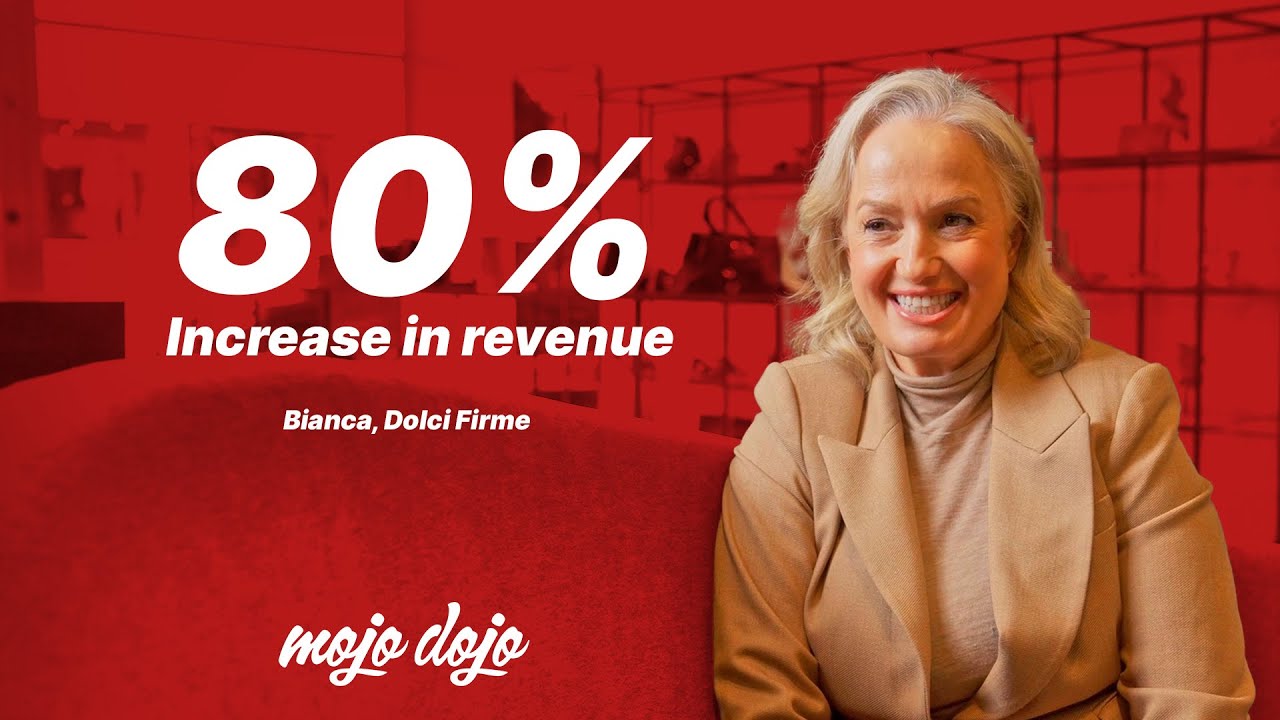
Real Mojo Dojo clients, on the record.
Shopify stores for the centre of New Zealand's online spending.
Auckland accounts for around 31% of New Zealand's online spending, and that spending grew 9% in the region in 2025. Nationally, online sales passed $12.7 billion and nearly one dollar in four of physical retail spend went online. For a retailer or brand in the region, the store is increasingly where the business is won or lost.
The good news is that shoppers here favour home-grown sellers. New Zealand-based retailers took about 80% of online spending in 2025. The catch is that they have to earn it: more than half of shoppers look for independent reviews, ratings or real customer feedback before they buy, and they check delivery options and returns before they trust a store they have not used before.
It is also a cautious time to spend. Business numbers grew only 0.8% in 2024, the slowest rise since 2012, and 72% of the region's businesses have no employees. Owners want a store that pays its way quickly, without a long list of paid apps and monthly fees.
We build Shopify and Shopify Plus stores that make the trust signals obvious: reviews, clear shipping and returns, NZD and AUD pricing where you sell across the Tasman, and eCommerce SEO foundations so the store competes with offshore retailers in search.
Our nationwide offer is described on the Shopify Development New Zealand page. We also provide Shopify development in Wellington. Related Auckland services include Shopify SEO, Ecommerce SEO and Web Design. Explore the full range of Auckland services.
Shopify development in Auckland: the numbers behind the market.
Official and industry figures on the region and its online shoppers.
Industries we help in Auckland.
Five sectors where a stronger Shopify store makes a measurable difference.
Retail and visitor shopping
Visitor spend here leans towards retail more than in the rest of the country. We build stores that serve both locals and visitors, with international shipping, multi-currency pricing and gift options.
Wholesale and distribution
Wholesale trade is the fourth-largest industry by GDP. We build Shopify Plus B2B storefronts with trade logins, price lists, minimum quantities and on-account payment.
Manufacturers
Makers selling direct and to trade need one catalogue with two sets of rules. We structure products, variants and pricing so retail and trade orders run from the same stock.
Technology companies
The region hosts 108 of the top 200 tech companies in New Zealand. For product-led brands we build headless storefronts with Hydrogen and integrate subscription and account features.
Education and student services
International student numbers rose 14% in 2025. We build stores for course materials, uniforms and student essentials that work for buyers reading in a second language.
Ready to build a store Auckland shoppers trust?
Talk to our Shopify developers about a new build, selling across the Tasman with Shopify Markets, a Shopify Plus B2B store or a move off Magento or WooCommerce.
What conversion-focused eCommerce work delivers.
Results from Mojo Dojo eCommerce clients across our portfolio, not New Zealand market figures. See the case studies below.
Why Kiwi brands choose Mojo Dojo for Shopify and Shopify Plus.
Shoppers in New Zealand look hard at a store before they buy. In 15 years of launching and replatforming brands on Shopify and Shopify Plus, we have learned to build in the signals they look for, from reviews and returns policies to accurate delivery estimates, while keeping the app stack lean so monthly costs stay under control.
We are a web design and development agency with marketing specialists on the same team, so one partner can plan, build and grow the store.
Shopify is a hosted platform that lets businesses of any size sell, ship and manage stock. Making it work across two countries and two currencies takes an experienced Shopify developer and designer who have done it before.
Our project managers, designers, developers and SEO specialists make the build as easy as possible for you and your staff, and give you what you need to decide well now and later. The approach has converted millions in sales for clients.
Our Shopify services
- Shopify development
- Shopify planning & discovery
- Shopify headless
- Shopify Plus development agency
- Shopify website design
- Shopify theme development
- Shopify SEO and our Shopify SEO agency
- Magento to Shopify migration
- Shopify alternatives
Why Shopify is a safer bet than a store you have to maintain yourself.
Shopify looks after the platform. We make sure the store earns the trust of cautious buyers.
Paying developers for every update
Custom platforms need developers to patch and update the code on a regular basis.
Free updates and platform uptime
You receive free updates to the code, uptime from the Shopify platform and access to a range of functions for a set monthly subscription.
Features that need a rebuild
Adding capability to a custom-coded store usually means another development project.
Extensions that extend the store
Modifications can easily be applied by adding extensions which further the capabilities of your Shopify site.
Shoppers who will not buy from a store they do not know
Most buyers check reviews, delivery and returns before purchasing, and a store that hides them loses the sale to a familiar name.
Trust signals where they count
We add product reviews, visible delivery and returns information, secure payment badges and clear contact details to product pages and the cart, not just the footer.
Selling to both sides of the Tasman from one store
Customers in Australia see NZD prices, the wrong delivery times and GST that does not apply to them.
Markets set up properly
We configure Shopify Markets with local currency, duties and tax settings, and shipping rules for each country, so both audiences see the right price at checkout.
Relying on your agency for every change
Is your site custom coded and difficult for you to use?
A store you can manage yourself
We create Shopify developments that work for YOU, easily managed and modified by you and your staff at the end of the day.
All our Shopify websites are.
Whatever you sell and wherever you ship, every Auckland build meets these four standards.
SEO friendly. An SEO friendly Shopify store: our team of experts takes time to understand your business to ensure relevant keywords are built in to rank well.
On brand. Brand relevancy by creating a Shopify design aligned with your brand that meets customer needs.
Designed to convert. Developed around the ultimate user pathways, ensuring customers are converting and generating revenue.
Easily modifiable. Your Shopify store can be managed and modified by you at the end of the day, without relying on external parties.
Shopify development with a difference.
Shopify gives small teams control over every part of the store. You have the ability to:
Manage inventory
Keep track of your stock levels both in your bricks and mortar store and on your website. Make modifications to your products, offer variations in size, colour, in bundles or singular items, and find the most efficient ways to categorise them.
Modify and customise your own site
Have you always relied on your agency or developers to modify your site? Shopify developments allow you to make changes to your site without relying on external parties.
Website maintenance
We highly recommend regular website maintenance to improve the security of your website. Regular updates bring new features and functionality and reduce the risk of being hacked.
Flexible shipping options
Choose fixed shipping rates, tiered rates, free shipping over a certain spend or as a standard inclusion, weight-based shipping or location-based shipping all over the world.
Secure payment facilities
Secure payment gateways and integrations with multiple applications ensure your payments are delivered to you safely and your customers' payment details are not compromised.
Manage customer information
Store customer information through customer profiles, categorise customers, export for marketing purposes and learn more about your customer groups through their buyer behaviour.
Headless Shopify
Shopify headless uses a Jamstack approach and focuses on speed and scalability. A headless build with Hydrogen or your custom stack gives you the flexibility you need from your eCommerce platform.
Get your free Shopify store audit.
Send us your store URL and within 48 hours we'll return a Shopify audit covering trust signals, speed, app costs and checkout. No calls, no obligations.
The trading year in New Zealand.
The fourth quarter dominates. Nearly 30% of New Zealand's annual online spending falls between October and December, peaking over the Black Friday to Cyber Monday weekend. We plan builds, migrations and theme changes to be finished well before November so the store is stable when the traffic arrives.
Earlier in the year, more than 185,000 advance tickets were claimed for the 2025 Auckland Lantern Festival at Lunar New Year, and the Pasifika Festival follows in March, both important for brands that serve Chinese, Asian and Pacific communities. The financial year for most businesses ends on 31 March rather than 30 June, so we time trade promotions and budget-driven B2B campaigns for February to April.
Our Shopify development services in full.
What stores in this market need most
Most of the New Zealand stores we review need three things before a redesign: stronger trust signals, a leaner app stack and a clean setup for selling into Australia. The sections below explain how those fit into standard Shopify, Shopify Plus and headless builds.
Shopify Store Development
Shopify is the world's leading ecommerce platform for good reason. It handles hosting, security, and payment infrastructure at a level that most businesses could not replicate themselves. What it does not do is tell you how to build a store that converts.
Over the last 15 years, Mojo Dojo has built hundreds of Shopify stores across retail, fashion, health, beauty, homewares, food, and industrial supply. Every store we build starts with your customers. How do they navigate? What do they need to see before they buy? Where do they drop off?
Our store builds cover everything from initial Shopify account setup and theme selection through to custom Liquid development, app configuration, and full launch support. We do not hand you a store and disappear.
Shopify Plus Development
Shopify Plus is the enterprise tier of the platform, built for high-volume merchants. It unlocks capabilities that standard Shopify does not offer, including checkout extensibility, advanced automation through Shopify Flow, dedicated support, and lower transaction fees at scale.
Our Shopify Plus work includes:
- Custom checkout UI extensions and checkout.liquid builds
- Shopify Flow automation design and implementation
- Wholesale / B2B store configuration
- Multi-store / expansion store architecture
- Launchpad campaign scheduling and flash sale configuration
- Enterprise ERP and OMS integrations (NetSuite, SAP, MYOB)
Headless Shopify / Jamstack
For merchants who need extreme frontend performance, a headless Shopify architecture decouples the storefront from the Shopify backend. Your frontend is built with a modern JavaScript framework (Next.js, Remix, Nuxt) and served via a CDN edge network, while Shopify handles the commerce logic through the Storefront API.
The result is a store that loads in under a second, scores 95+ on Google Lighthouse, and can support complex content experiences that are impossible in a standard Liquid theme.
We use Shopify Hydrogen for purpose-built headless storefronts and can integrate with Contentful, Sanity, or your existing CMS for content management. Headless is not right for every store, and we will tell you honestly if the complexity is warranted by your revenue and performance requirements.
Shopify SEO Optimisation
Shopify has well-known SEO constraints out of the box. Duplicate content from collections and products, the /collections/*/products/* URL structure, and limited control over canonical tags are common pain points that affect organic performance.
Our Shopify SEO work addresses the platform's limitations directly:
- Product and collection page schema markup (Product, BreadcrumbList, FAQPage)
- Canonical URL management and duplicate content elimination
- Faceted navigation and filter page management
- Image optimisation and alt text at scale
- Collection page content architecture for long-tail keyword targeting
- Core Web Vitals and Lighthouse score improvements
Magento to Shopify Migration
Migrating from Magento to Shopify is one of the highest-value platform decisions an ecommerce business can make. Magento carries significant technical debt, requires expensive dedicated hosting, and demands developer involvement for tasks that Shopify handles natively.
A migration done poorly destroys organic rankings built over years. Our migration process preserves your SEO equity through meticulous 301 redirect mapping, URL structure planning, and content validation before cutover. We have migrated stores ranging from 500 to 50,000 SKUs.
Our migration process covers:
- Product, customer, and order data migration
- 301 redirect mapping for all existing URLs
- SEO audit pre- and post-migration
- App stack rationalisation and configuration
- Theme development on the new platform
- Parallel testing before cutover
- Post-launch monitoring and issue resolution
How we build your Shopify store.
Six stages, run remotely with video calls in New Zealand business hours and a shared staging store for every review.
Planning and discovery
We map your customers, catalogue, integrations and goals in a Shopify planning and discovery phase, then recommend Shopify, Shopify Plus or headless based on what your store actually needs.
UX and design
We design user pathways and a Shopify design aligned with your brand, focused on purchases via a refined UI/UX and conversion best practice.
Development
From Shopify account setup and theme selection through to custom Liquid development, app configuration and integrations.
SEO and data migration
Schema markup, canonical URLs and Core Web Vitals are built in. For replatforms we migrate product, customer and order data and map 301 redirects for every existing URL.
Testing
Parallel testing before cutover, plus a pre-launch crawl to verify nothing has been missed.
Launch and ongoing support
Full launch support, post-launch monitoring and issue resolution, with an ongoing maintenance and optimisation retainer available.
Areas we serve in Auckland.
We work with brands across the region remotely, through video calls, shared staging stores and regular reporting. That includes the CBD and the central isthmus, from Ponsonby, Grey Lynn and Mt Eden to Epsom, Remuera, Newmarket, Parnell, Mt Albert and Onehunga.
On the North Shore we build for businesses in Takapuna, Devonport, Albany, Silverdale and Orewa. In the west that means Henderson and New Lynn, and in the east and south Botany, Howick, Flat Bush, Manukau, Papatoetoe, Ōtāhuhu, Papakura and Pukekohe.
eCommerce results from the Mojo Dojo portfolio.
Projects for online stores in our wider client base. They illustrate our approach, not results for New Zealand businesses.



“Their team understood our business before we even had to explain it. Enquiries are up 250% and the quality is better than ever.”
The framework behind the stores we build.
Most stores are optimised for traffic. This one is about revenue, the ten changes to a store that move the number at the bottom of the report, in the order to make them.
Send me the Ecommerce Playbook →
Free. 14 pages. In your inbox. Magic-link delivery, it arrives in about two minutes, and there's no sales call attached to reading it.
Do you work with Auckland businesses?
Yes, remotely. We run workshops, design reviews and training over video calls scheduled in New Zealand time, give you a shared staging store to test every change, and send regular reporting. There is no office to attend.
Can one Shopify store sell in New Zealand and Australia?
Yes. With Shopify Markets we set up separate currencies, pricing, tax and duty settings and shipping rules for each country from one store and one inventory. For larger operations on Shopify Plus we can also run separate expansion stores if the ranges or fulfilment differ.
How do we keep monthly app costs down?
We start with what Shopify does natively and only add apps where they clearly earn their fee. During discovery we list every app you use today, what it costs and what it does, and we often remove or consolidate several during a rebuild.
How long does a Shopify build take?
A standard Shopify store with an existing theme and up to 500 products typically takes 4 to 6 weeks from design approval to launch. Custom theme builds or Shopify Plus projects with complex integrations typically take 8 to 12 weeks. Migration projects depend on the size of your product catalogue and the state of your existing data. We provide a detailed project timeline as part of your quote.
Will my store rank on Google after you build it?
We build every Shopify store with Shopify SEO optimisation as a baseline requirement, not an optional add-on. This includes schema markup, canonical URL management, clean URL structures, image optimisation, and Core Web Vitals performance. For ongoing organic growth, our Shopify Ecommerce SEO retainer builds on that foundation with content strategy, link acquisition, and monthly reporting.
Do I need Shopify Plus or will standard Shopify work for me?
Shopify Plus becomes commercially justified when you need custom checkout extensibility, advanced automation via Shopify Flow, B2B wholesale channels, multi-store expansion store architecture, or when your transaction volume makes the lower transaction fees economically worthwhile. We will give you an honest assessment based on your current and projected revenue.
Can you migrate my store from Magento or WooCommerce without losing my SEO rankings?
Yes, and this is one of the most important parts of a platform migration. We conduct a full pre-migration SEO audit, document every indexed URL on your existing store, map 301 redirects to their new Shopify equivalents, and run a post-migration crawl before going live to verify nothing has been missed. We have successfully migrated dozens of stores from Magento, WooCommerce, BigCommerce, and custom platforms without ranking loss.
What does a Shopify development agency do?
A Shopify development agency plans, designs, builds and launches your Shopify store. That covers account setup, theme selection or a custom theme, custom Liquid development, app configuration, integrations, data migration and SEO foundations, followed by launch support and ongoing maintenance.
Why choose Shopify over a custom-coded eCommerce site?
Shopify is a hosted solution, so the infrastructure, code updates and uptime are handled for you. It provides an environment that is compliant with privacy and credit card processing laws, processes payments securely, and lets you extend the store with apps rather than paying developers for every change.
Can I manage and update my Shopify store myself after launch?
Yes. Every store we build is designed to be easily managed and modified by you and your staff. You can update products, variations, collections, shipping rules and customer information without relying on your agency or developers.
Is headless Shopify right for my store?
Headless Shopify decouples your storefront from the Shopify backend for extreme frontend performance and complex content experiences, typically built with Shopify Hydrogen. It suits stores whose revenue and performance requirements justify the added complexity, and we will tell you honestly if a standard Liquid theme is the better choice.
Can you take over a Shopify store another developer built?
Yes. If your current developer cannot handle your Shopify customisation or produces sub-par results, we audit the existing theme, apps and custom code, fix what is holding the store back and take over development and support from there.
Do you offer ongoing Shopify maintenance and support?
Yes. We do not hand you a store and disappear. We offer post-launch monitoring and issue resolution plus an ongoing retainer for maintenance, new features, conversion rate optimisation and security updates.
Which systems can you integrate with Shopify?
We integrate Shopify and Shopify Plus with enterprise ERP and OMS platforms such as NetSuite, SAP and MYOB, content management systems such as Contentful and Sanity, and the Shopify app ecosystem for reviews, subscriptions, shipping and marketing.
Get your free Shopify store audit.
Send us your store URL and within 48 hours we'll return a Shopify audit covering trust signals, speed, app costs and checkout. No calls, no obligations.