

GEO Services
Ask ChatGPT, Gemini or Perplexity who to hire and they name a few businesses. Generative Engine Optimization builds the reputation, mentions and consistent facts those answers are built from, so your business is one of the names.
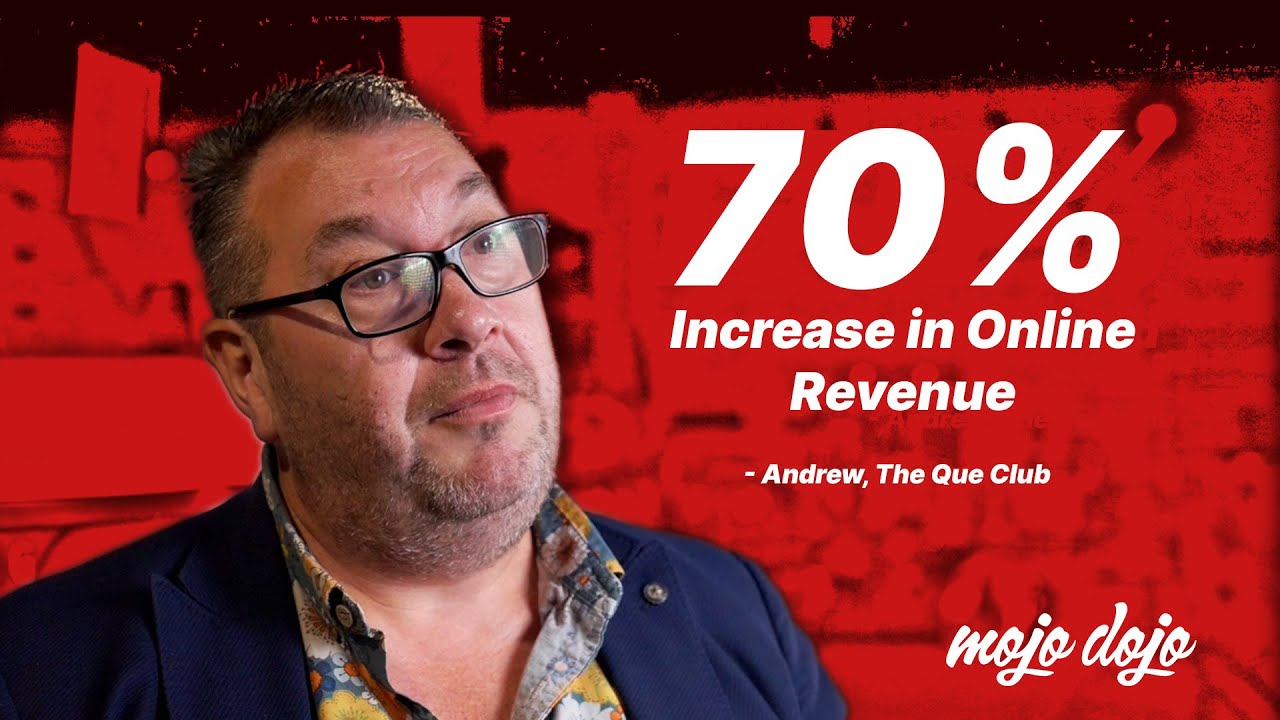
Real Mojo Dojo clients, on the record.
What is GEO?
GEO is the work of getting your brand named and recommended in AI-generated answers. Where AEO gets a page quoted, GEO shapes what the assistant believes about your business and whether it suggests you when a buyer asks for options.
What an assistant needs before it recommends you
To know you exist. Your business appears on sources it reads: your site, directories, reviews, press and industry pages.
To know what you do. The same clear description of your services, area and customers, everywhere it looks.
To trust you. Independent mentions, reviews and references that back up what your own site says.
To match you to the question. Pages and mentions that connect your brand to the specific needs buyers ask about.
To get the facts right. Current prices, locations and offers, so it does not repeat something out of date.
How an AI engine builds its answer.
A buyer types a full question, often with their situation spelled out. The engine runs several searches behind the scenes, reads a handful of sources and writes one reply, usually with links. Google says AI Overviews and AI Mode may run related searches across subtopics, which it calls query fan-out, before choosing the pages it shows. ChatGPT, Perplexity and Claude each run their own search crawlers for the same job.
Why GEO is different from ranking.
A list of links lets a buyer compare ten businesses. An AI answer usually names three to five, and many buyers never look further. The names it picks come from what it has read about each business across the web, not from one page.
Why it matters now.
In our audit of 719 B2B companies the average AI Visibility Score was 50 out of 100, and only 11% scored 70 or above. Most businesses are not being named yet, which means the field is still open.
GEO pairs with AEO, which gets your pages quoted as the answer. Our AI SEO services run both together.
What we see in our own data.
First-party numbers from our audit of 719 B2B companies and the logs of our own website.
What is included in our GEO services.
Research, content, technical fixes, authority building and reporting, run as one program.
Brand visibility baseline
The questions buyers ask about your category, run across the major assistants, with who gets named and how you are described.
Conversational question research
The longer, situation-specific questions buyers put to assistants, taken from search data, sales calls and your inquiry forms.
One brand description
A single, accurate description of your business, services and area, applied to your site, profiles and listings.
Source mapping
The sites each assistant draws on for your category: directories, review sites, forums, industry publications.
Citable pages
Pages that answer real questions, including who you suit and how you compare, with sourced numbers, named experts and clear lists.
Crawler access and schema
The search crawlers of ChatGPT, Perplexity, Claude and Google allowed through robots.txt and your firewall, with schema checked.
Digital PR and mentions
Earned mentions on the sources that matter, through PR, partnerships, expert commentary and listings.
Review signals
A steady flow of genuine reviews on the platforms assistants read, and replies that reinforce what you do.
Wrong-answer fixes
When an assistant gets your prices, services or history wrong, we trace the source and correct it.
Mention tracking
Monthly tracking of whether you are named, how you are described and which sources each assistant used.
Get your free GEO audit.
Send us your website and we will show you whether ChatGPT, Gemini and Perplexity name your business when buyers ask, and who they name instead.
How GEO fits with SEO and AEO.
Three disciplines, one set of foundations.
What they share
Helpful, accurate content, clear signs of experience and expertise, and a site that loads fast, works on a phone and can be crawled. Google says a page needs no extra technical work to appear in AI Overviews or AI Mode: it must be indexed and eligible to show with a snippet, the same as normal search.
The goal
SEO earns your pages a position in a list of links. AEO gets one page quoted as the answer to a question. GEO gets your brand named and recommended when buyers ask for options.
What the buyer sees
Search shows ten results to compare. An assistant writes one answer that names a few businesses and explains why it chose them.
The questions
Searches tend to be a few keywords. Questions to an assistant are longer and personal: "an accountant for a small building company who understands payroll tax", not "accountant". GEO plans content around those questions.
What counts as authority
SEO leans on links and page authority. GEO also weighs what independent sources say about you: reviews, press, directories, original research and named experts.
How success is measured
SEO reports rankings, clicks and inquiries. GEO reports how often you are named, how accurately you are described, your share of voice against competitors and the inquiries assistants send.
GEO needs a site worth recommending. An assistant that sends a buyer to a slow, unclear site loses their trust, and so do you. That is why GEO sits on top of SEO and clear, specific copy, with digital PR and link building doing most of the off-site work.
How each assistant finds its sources.
Each engine reads the web its own way. These are the rules and controls its maker publishes, and what we check for each.
ChatGPT
ChatGPT search finds pages with a crawler called OAI-SearchBot. OpenAI says sites that block it will not be shown in ChatGPT search answers.
AI Overviews and AI Mode
Built on the normal Google index. If a page is indexed and can show a snippet, it is eligible, so classic SEO carries straight over.
Gemini
Gemini Apps ground answers in content from the Google Search index. The Google-Extended setting in robots.txt controls whether your content is used for that.
Perplexity
PerplexityBot finds and links the sites Perplexity cites. Perplexity recommends allowing it in robots.txt and in any web firewall.
Claude
Claude-SearchBot indexes pages for search, and Claude-User fetches a page when someone asks about it. Each is set separately in robots.txt.
Copilot
Bing Webmaster Tools now reports how often your pages are cited in Microsoft Copilot and in AI summaries in Bing, so we check your Bing setup too.
What makes a page worth quoting and a brand worth naming.
Evidence beats volume.
The best public evidence comes from the researchers who named the field. In the paper that introduced GEO (Aggarwal and others, presented at KDD 2024), adding cited sources, quotations and statistics to a page lifted its visibility in AI answers by 30 to 40% on the paper's main measure. Keyword stuffing gave little or no gain, and on Perplexity it did 10% worse than leaving the page alone. Pages that ranked lower in search gained the most.
So when we write for GEO, we follow a few plain rules:
Headings that ask the question
"How long does a kitchen renovation take?" tells a machine and a reader what follows. "Our process" does not.
The answer first
Two sentences that answer the question, then the detail. Short paragraphs, one idea each.
Lists that say why
Each item says what it does for the reader, not just a feature name.
Numbers with a source
Every statistic says where it came from, and the source is one an assistant can check.
Named experts
Quotes carry a real name, role and business, from your team or people you work with.
Facts kept current
Services, areas, team and offers updated everywhere they appear, so no assistant repeats last year's version.
Why good businesses are left out of AI answers.
The problems we find most often, in content, technical setup and strategy.
Keyword stuffing
Repeating the search term does not help. In the GEO research it made pages less visible on Perplexity.
Thin or vague pages
"Quality service at a fair price" gives an assistant nothing to repeat. Specific facts and examples do.
Claims without sources
Numbers with no source behind them are easy to ignore and hard to trust.
Crawlers blocked
AI search crawlers turned away by robots.txt, a firewall or the hosting provider, often without the owner knowing.
Content a machine cannot read
Key facts locked in images, PDFs or scripts. Google asks for important content to be available as text.
Slow or broken on a phone
Pages that time out or fall apart on mobile are harder for a crawler to read and for a buyer to trust.
Mixed messages
A different description of the business on every profile, so no assistant is sure what you do.
Dropping SEO
Google still sends most search traffic, and the pages assistants cite usually already rank.
Set and forget
Assistants change how they choose sources. Without monthly checks you will not notice when you drop out.
How we measure GEO.
Named, described, recommended
Each month we run an agreed set of buyer questions across ChatGPT, Gemini, Perplexity, Claude and Copilot. We record whether you are named, whether you are recommended or just mentioned, how you are described and which sources the answer used.
Question coverage and share of voice
Across the full set of questions we report the share where you appear, assistant by assistant, and how often you are named compared with the competitors who appear, so you can see the gap close over time.
Accuracy
Wrong prices, old services or a competitor's details attached to your name are logged, traced to the source and fixed. Our AI brand monitoring page explains how.
Traffic and inquiries
Google Analytics now groups visits from assistants such as ChatGPT, Gemini and Copilot into an AI Assistant channel, while clicks from AI Overviews and AI Mode still count as Organic Search. We set up AI referral tracking and tie it to inquiries. Only 9% of the B2B companies we audited measure this today.
What we do not promise
No one can guarantee a mention, because each assistant chooses its own sources and changes how it does so. What we can do is remove the reasons you are left out and show you, month by month, what changed.
How we run GEO.
Six stages, then a monthly cycle.
Baseline
We run your buyer questions across the major assistants and record who is named, including you, and how each one describes you.
Questions and description
We map the questions buyers ask and settle one accurate description of your business for your site, profiles and listings.
Technical access
We check that every major AI search crawler can reach and read your key pages, and fix schema and site speed.
Citable content
We rewrite and add pages so they answer those questions with sources, named experts and current facts.
Authority building
PR, mentions, reviews and partnerships on the sites each assistant trusts for your category, worked through month by month.
Monthly reporting
Mentions, recommendations, accuracy, share of voice and inquiries, with the next month agreed.
Organic search results from our clients.
These are traditional SEO outcomes from published case studies. They show the authority and content foundations AI answers draw on. We do not present them as AI citation results.
Smarter SMSF
150% increase in course sales

ARP Engineering
292% increase in organic traffic

Planet Ark Power
46% increase in leads

Loan Gallery Finance
438% increase in organic keywords

Anvelo
2278% increase in organic rankings

Babylon Flowers
787% increase in revenue
“Their team understood our business before we even had to explain it. Inquiries are up 250% and the quality is better than ever.”
How AI engines decide which businesses to name.
A growing share of your buyers now ask ChatGPT, Gemini, Perplexity or Claude and never see a results page. How those engines decide which businesses to name, how to become one of them, and how to know if it is working.
Send me The GEO Playbook →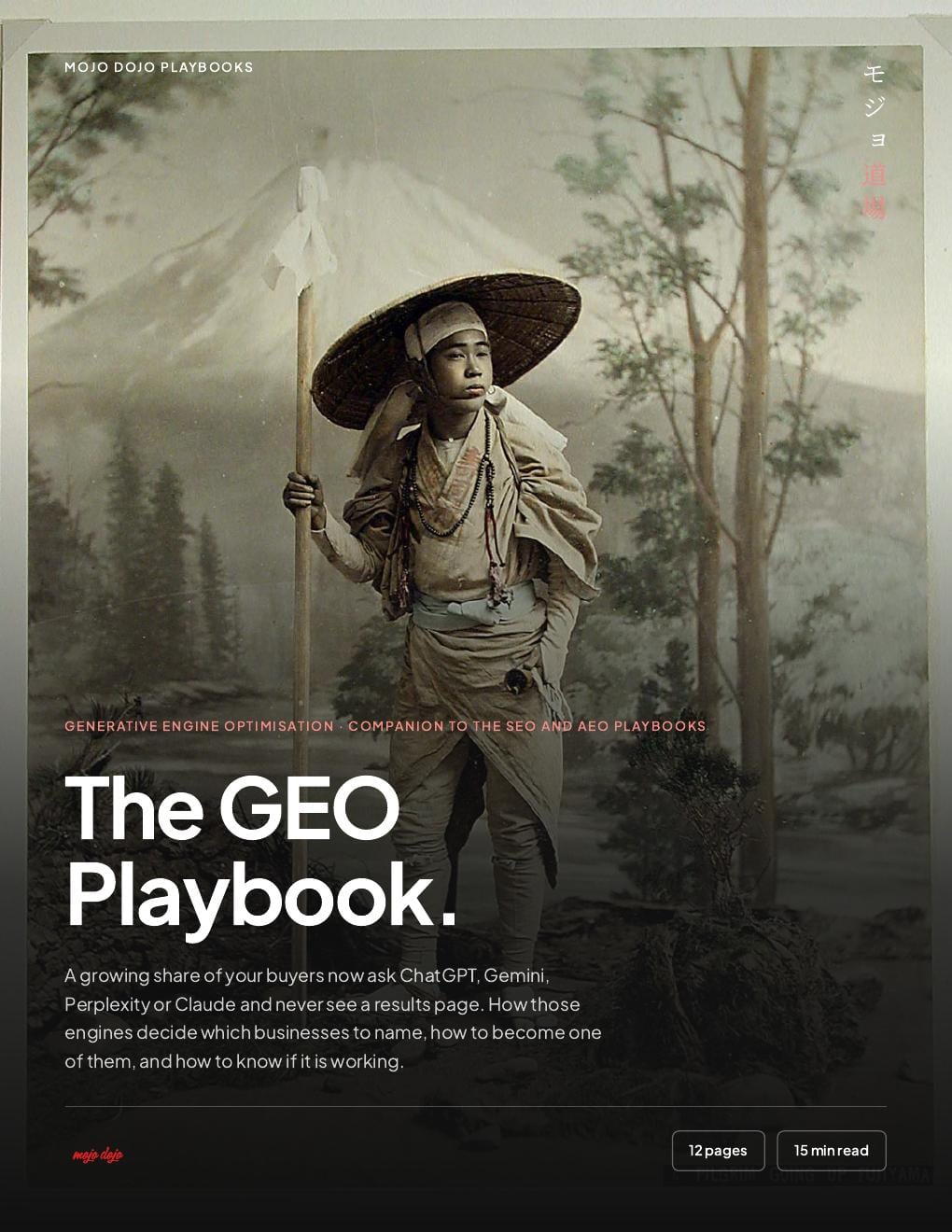
Free. 12 pages, 15 min read. In your inbox. Magic-link delivery, it arrives in about two minutes, and there's no sales call attached to reading it.
What is GEO?
Generative Engine Optimization, also called generative SEO, is the work of getting your brand named and recommended in answers from ChatGPT, Gemini, Perplexity, Claude and Copilot. It focuses on what those tools read about you across the web: mentions, reviews, listings and a consistent description of your business.
How is GEO different from SEO?
SEO earns your pages a ranking in search results. GEO earns your brand a place in AI answers, which depends more on what other sites say about you and on content an assistant can quote. They share foundations, so GEO works best alongside SEO.
How is GEO different from AEO?
AEO gets one of your pages quoted as the answer to a question. GEO gets your business named when buyers ask for options or recommendations. Most businesses need both, because the pages that get quoted also feed what assistants believe about you, so we run them as one program.
Which AI assistants does GEO cover?
ChatGPT, Google Gemini, AI Overviews and AI Mode, Perplexity, Claude and Microsoft Copilot. Each one finds and reads sources differently: ChatGPT, Perplexity and Claude run their own search crawlers, Gemini and AI Overviews draw on the Google index, and Copilot citations are reported in Bing Webmaster Tools. We track and report them separately.
What actually gets a business named by an assistant?
Clear, consistent facts about you across the web, independent mentions and reviews, and pages worth quoting. In the research paper that introduced GEO, adding sources, quotations and statistics to a page lifted its visibility in AI answers by 30 to 40%, while keyword stuffing did not help.
How long does GEO take?
Fixing your own site and profiles can show within weeks. Earning mentions and reviews on the sources assistants trust usually takes three to six months to show up consistently. We report monthly, assistant by assistant, so you can see progress well before then.
Can you guarantee ChatGPT will recommend us?
No. Assistants choose for themselves and change how they do it. We remove the reasons you are left out, build the evidence that you should be named, and report exactly how often you are, in which assistants and for which questions.
Is GEO right for every business?
It suits businesses buyers shortlist, with real reviews and results, in categories where competitors are already being named. It is less suited to impulse purchases and short campaigns. Very new businesses usually start with the basics and SEO, then add GEO once there is something for assistants to find.
Do I still need SEO if I invest in GEO?
Yes. Google still sends most search traffic, and Google says the pages in AI Overviews must already be indexed and eligible for normal search. GEO is added to SEO, not swapped for it, and most of the work helps both at once.
How do I get started with GEO?
Start with a baseline. Send us your website and we will run your buyers' questions across the major assistants, show you who they name, how they describe you and what is holding you back. That free GEO audit becomes the plan.
Get your free GEO audit.
Send us your website and we will show you whether the major AI assistants name your business when buyers ask, who they name instead, and what it would take to change that. No obligation.
More AI search and SEO services.
Specialist pages for each AI tool, the SEO underneath it and the guides we publish.