

Google Ads Audit
We audited a single Google Ads account covering nine years and $32,277,473 of spend across 507 campaigns. Two thirds of one campaign’s conversions turned out to be the client’s own brand name. We will run the same audit on your account, free, and show you what your dashboard is averaging away.
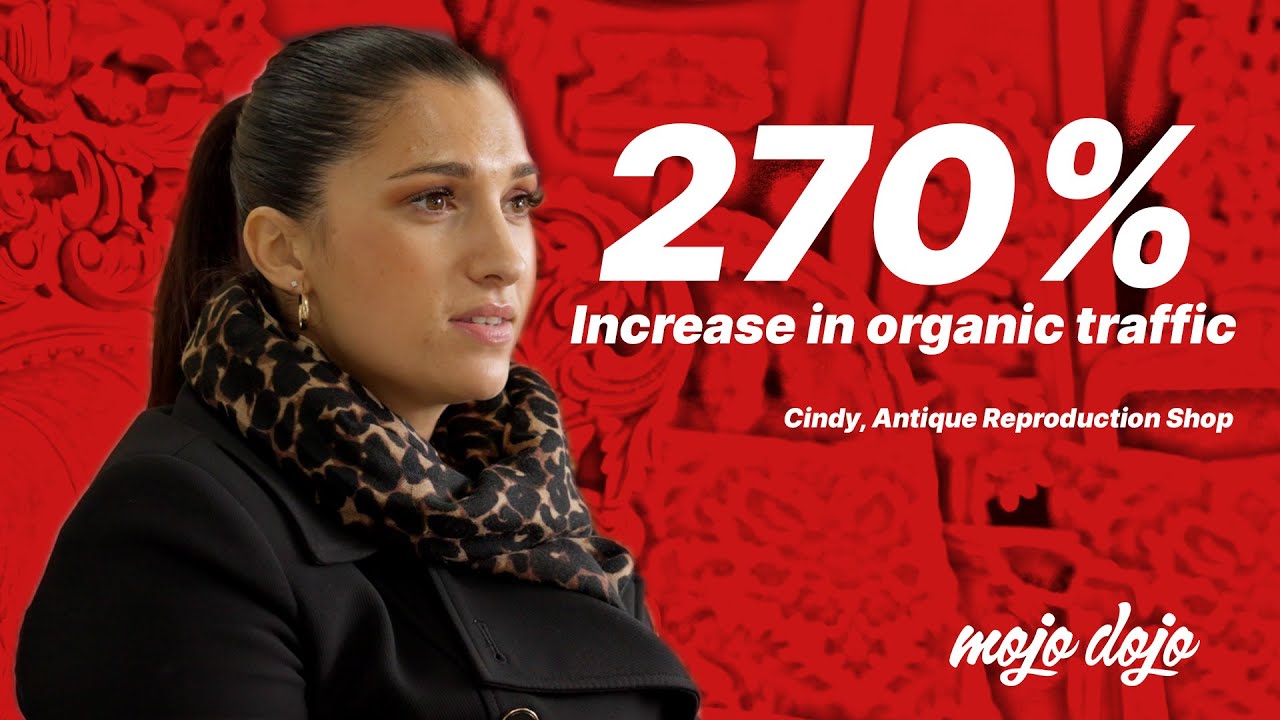
Real Mojo Dojo clients, on the record.
The account we audited. Pulled through the Google Ads API, not exported from the interface. Every campaign, ad group, keyword and search term back to the account’s first dollar.
A $144 campaign that was really two campaigns
In August 2026 we were handed a Google Ads account that had been running since 2017. Blended cost per lead had drifted to $300 to $400 and the brief was to get it to $150.
Competitor (Exact) · Cost per lead, by query type
A campaign named Competitor (Exact) was reporting 286 conversions at $144 each. Respectable, on the overview. The search terms told a different story.
Nobody was making decisions about a $144 campaign. They were making decisions about two campaigns and calling the average a strategy.
That is one finding of sixteen. The rest are published in full, with the numbers, in the $32M audit series.
Sixteen checks, every one of which found something
Eight of them are below. Each one is a published post with the account numbers attached, so you can see the method before you hand over access.
Brand leakage in non-brand campaigns
Close variants pull brand queries into competitor and generic campaigns, where they convert cheaply and flatter the blended figure. We split every campaign’s search terms into brand and non-brand and recalculate cost per lead on both halves.
Conversion double-counting
We check whether a single lead is registering against more than one conversion action. In the audited account one form submission counted three times, and Target CPA was optimising toward the inflated number.
Conversion actions firing on open pages
If your thank-you page returns 200 to a bot, your conversion count includes bots. It is a thirty-second test and it fails more often than it should.
Match type economics
Close-variant traffic cost 45% more per lead than queries that actually contained the keyword. We measure the premium you are paying rather than assuming phrase match behaves the way the documentation says.
Bid strategy against conversion volume
Target CPA needs roughly 30 conversions per campaign per month to work. Single-keyword ad groups give it two to eight. We check whether your structure and your bidding are compatible at all.
Experiments that never started
Five of seven experiments in the audited account sat in INITIATED for weeks. The failure is invisible in the interface and only surfaces through an API call.
Device and hour performance under smart bidding
Device bid adjustments are ignored under Target CPA. Mobile took 69% of budget at a 2.6% conversion rate while tablet converted at 5.0% on a twentieth of the spend.
Read all sixteen findings
The paused archive, ad strength against conversion rate, lead form attribution dates, test power, and four others.
Get your free Google Ads audit.
For accounts spending $10,000 a month or more. Read-only access, ten working days, findings with the numbers attached.
What we will tell you that others won’t
Most audits are sales documents. They find problems in proportion to how much the auditor wants the retainer. Ours is built on a series we published in full, including the findings that argue against our own commercial interest.
When the machine wins
Performance Max produced leads at $114 against Search at $126, on 8% of the budget. If Performance Max is outperforming your Search campaigns, we say so, even though the restructure would have been the bigger piece of work.
When the test cannot run
Proving a 25% lift takes 66 days at 420 clicks a day. We will tell you when a test you are planning cannot detect the effect you are hoping for, before you spend two months learning nothing.
When nothing is wrong
Sometimes the answer is no change. We will tell you when your Google Ads management does not need changing. Where the account genuinely needs work, that is what our PPC management does next, but the audit stands on its own and you keep it either way.
Four steps, ten working days
Read-only API access
You grant read-only access to your Google Ads account. We never need edit rights to audit, and we never move campaigns into an agency account.
We pull the full ledger
Not a date-range export. Every campaign, ad group, keyword and search term back to the account’s first dollar, straight from the API, so nothing is smoothed by the interface’s default attribution window.
Findings with the numbers attached
Each finding names the campaign, the figure, and what it costs per month. No severity scores, no traffic lights.
A conversation about what to do
Some findings are a negative keyword list. Some are a restructure. We tell you which is which, including the ones not worth fixing.
Paid media results from our clients.
Outcomes from published Mojo Dojo case studies. Every account is different, and these are not promises.

Bfree
1000% Increase in Sales

Downies Collectables
4,994% increase in Google Ads paid revenue

Linen House
109% increase in paid revenue
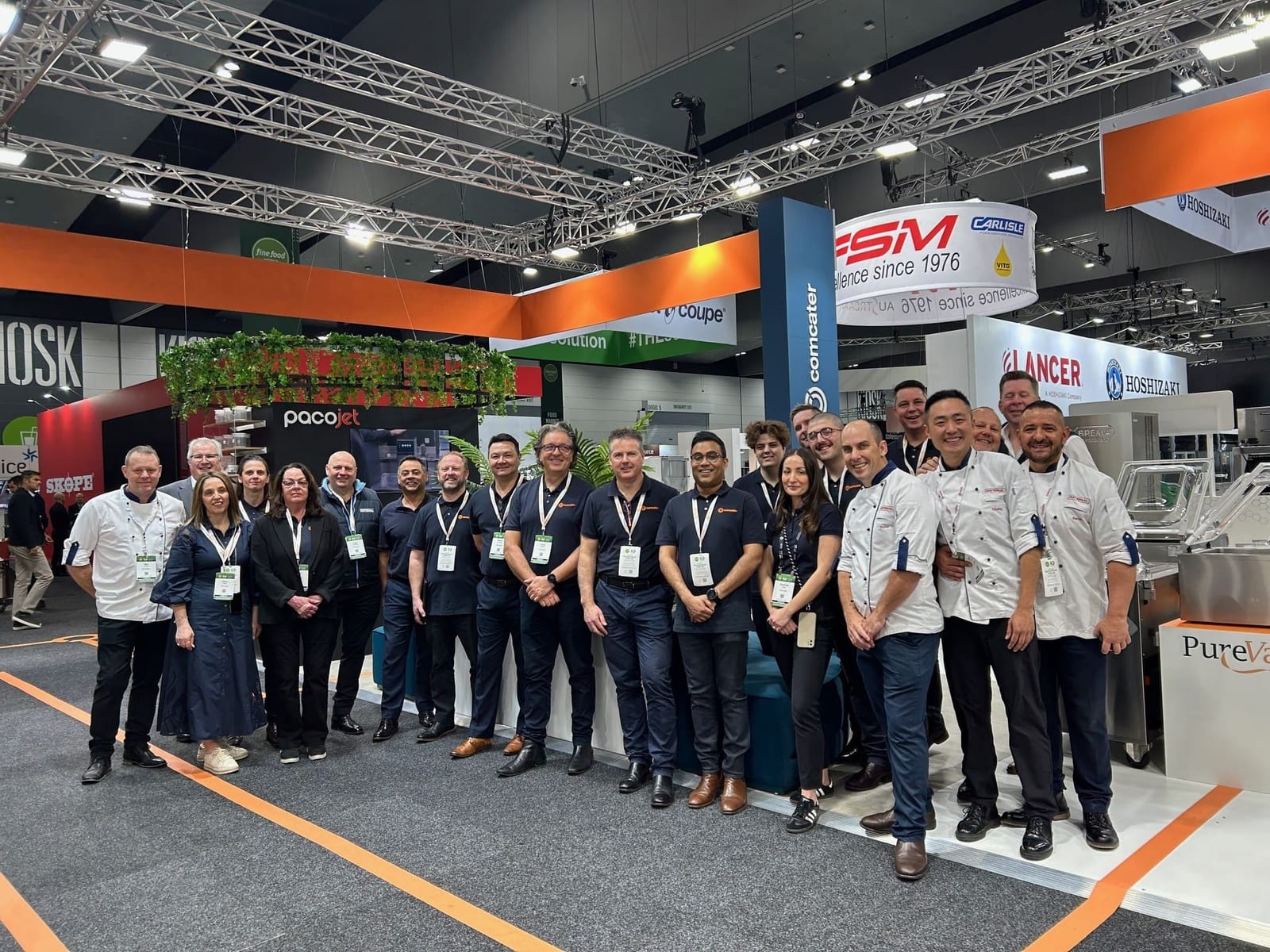
Comcater
50% decrease in marketing cost

Arise Solar
370% increase in paid conversions

Planet Ark Power
46% increase in leads
“Their team understood our business before we even had to explain it. Enquiries are up 250% and the quality is better than ever.”
The same $32M account, in twelve pages.
What nine years and $32 million of Google Ads taught us about outsmarting competitors instead of outspending them. One client, five ideas that transfer to any account.
Send me the PPC Playbook →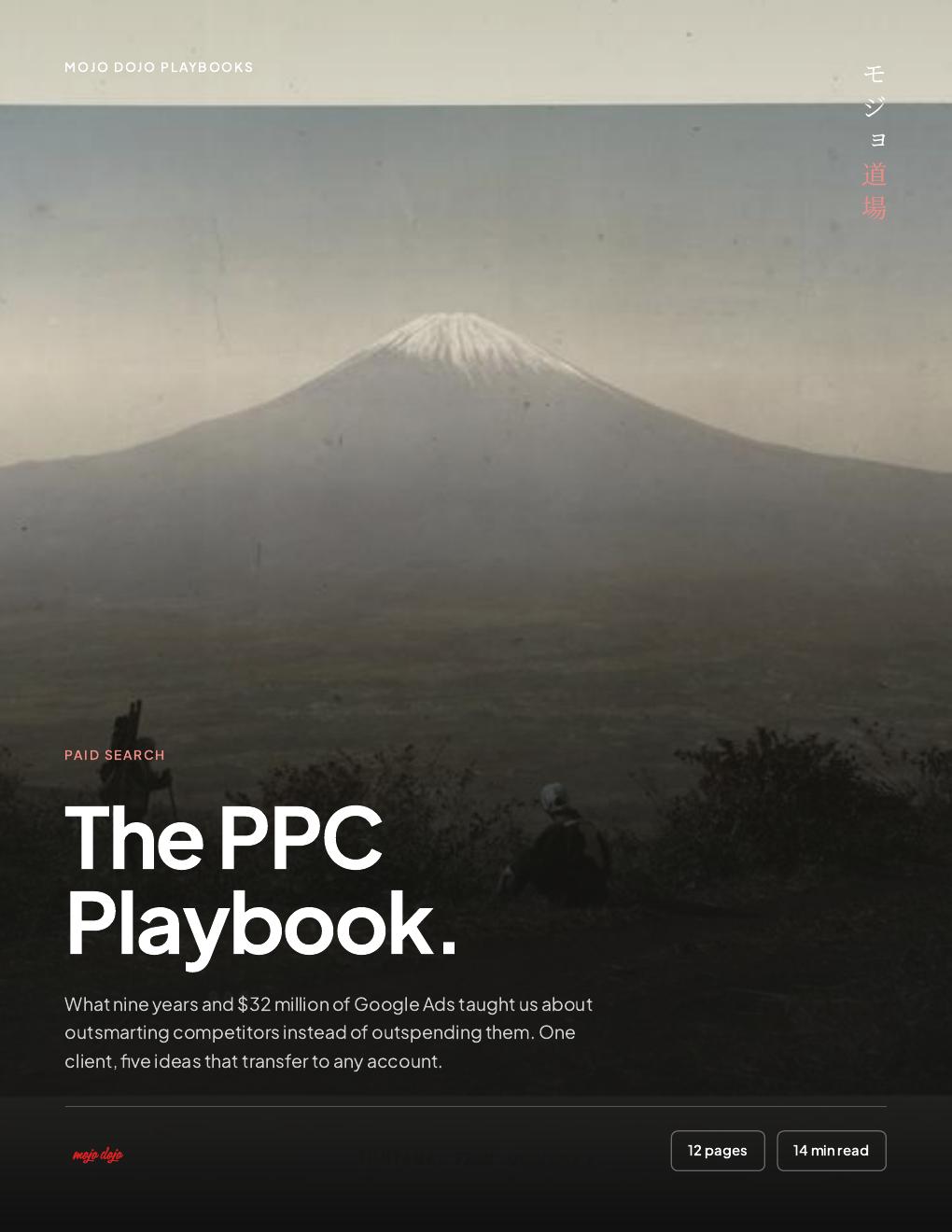
Free. 12 pages, 14 min read. In your inbox. Magic-link delivery — it arrives in about two minutes, and there’s no sales call attached to reading it.
Google Ads audit questions
The threshold, the access, and what happens if we find nothing.
What does the audit cost?
Nothing, for accounts spending $10,000 a month or more. Below that threshold the findings tend to be the same three things and you do not need us to tell you what they are. The sixteen posts in our published audit series cover them, free, in more detail than most paid audits.
Why the $10k minimum?
Because below it there is rarely enough conversion volume for the analysis to say anything statistically meaningful. We would be reading noise and charging you attention for it. The threshold is about whether the audit can produce a real answer, not about your budget.
Do you need access to my account?
Read-only access is enough. We never require edit rights to audit, and we never ask you to move your account into an agency MCC. If an agency asks for that before showing you anything, that is worth questioning.
How long does it take?
Ten working days from access being granted. Most of that is the analysis itself. Pulling nine years of an account through the API and reconciling it takes longer than reading a dashboard, which is the point.
What if you find nothing?
Then we tell you that, and you have a documented second opinion on an account you were unsure about. It happens. It is a better outcome than a manufactured list of problems.
Is this just a sales pitch for management?
The audit is the deliverable and you keep it whether or not we work together. We publish our findings openly. The sixteen-part series on the $32M account includes the conclusions that cost us work, like Performance Max beating Search and most A/B tests being too small to run.
Get your free Google Ads audit.
For accounts spending $10,000 a month or more. Read-only access, ten working days, findings with the numbers attached. No obligation and you keep the audit either way.
Before you send this
Minimum spend. $10,000 per month.
Access needed. Read-only. No MCC transfer.
Turnaround. 10 working days.
Cost. Nothing, and you keep the audit.
Deliverable. Findings with campaign names and figures, not a severity score.
Built on. The audit of a $32M Google Ads account, published in full.
Where a Google Ads audit leads.
The paid media services an audit usually leads into, and more on how we run one.