
#1 AI SEO Agency in New York
New York AI SEO that uses machine learning to find the gaps in your competitors' rankings and builds content that takes those positions. New York is the most competitive digital market in the US, dominated by finance, media and professional services, so AI-assisted precision is what wins page one.
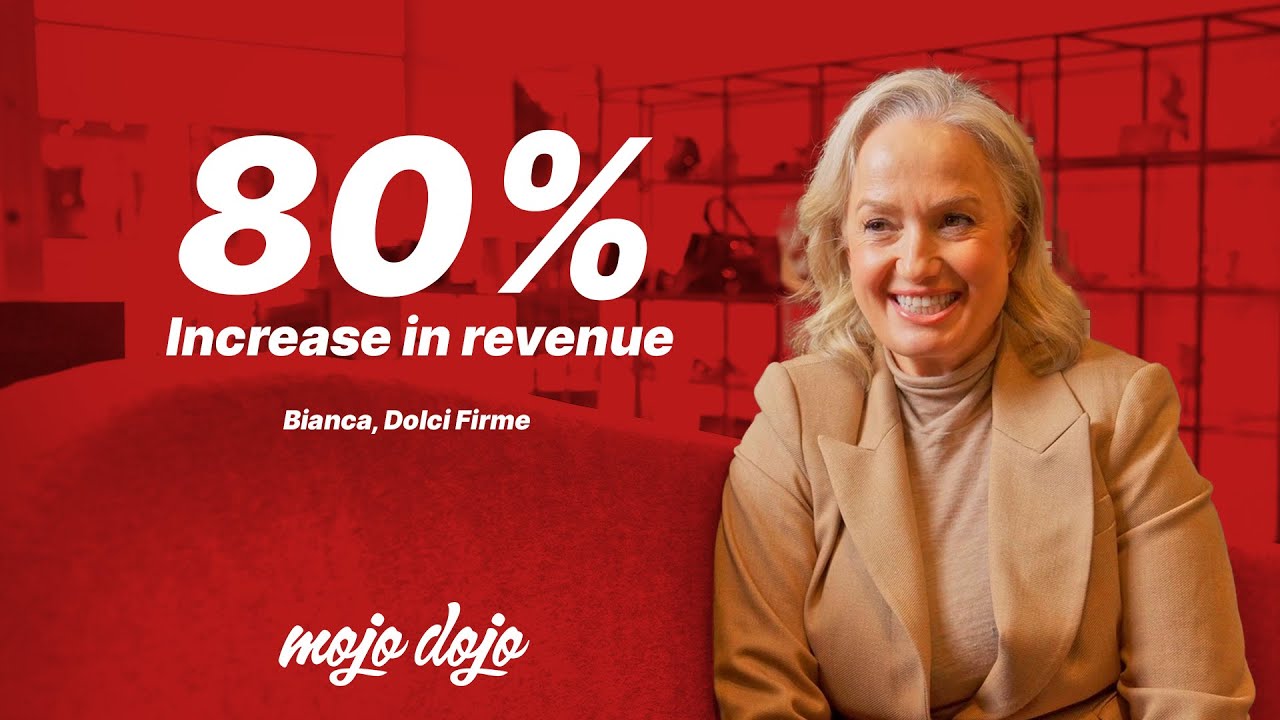
Real Mojo Dojo clients, on the record.
The most contested market in the country, compressed into one answer.
The city had 183,000 small businesses in 2023, the most ever recorded, and about one in three had been started in the previous two years. Add national brands, venture-backed startups and corporate headquarters, and almost every search category is saturated. At roughly 29,000 people per square mile, dozens of similar firms can sit inside the same few blocks. An AI assistant cuts all of that down to a short paragraph that names two or three of them.
Getting into that paragraph is a different job from buying clicks. Assistants look for pages that answer the exact question, facts that match across the web, and outside sources that vouch for the business. A Midtown employment lawyer, a Williamsburg coffee roaster and a fintech in the Flatiron District all need the same thing: their expertise and details stated so clearly, and corroborated so widely, that naming them is the safe choice.
The buyers are demanding. Wall Street alone accounted for 20.2% of all economic activity in the city in 2024, and companies here raised $24 billion of venture capital that year. Finance, tech and media decision makers are heavy AI users who expect evidence, not slogans. And with 47.7% of residents speaking a language other than English at home, many consumer questions are asked in Spanish, Chinese or Russian, where far fewer businesses have anything for an assistant to cite.
We also run this service nationally: see AI SEO USA. The same service is available in Los Angeles, Chicago, Houston, Austin and Miami.
Related New York services include SEO, Link Building and ChatGPT Ads. Browse all New York services.
AI SEO in New York: the numbers behind the competition.
Sourced figures on the density and demands of the market that AI assistants now summarize for your buyers.
Industries we help in New York.
What being cited and recommended by AI tools means for the sectors that define the five boroughs.
Finance and securities
Firms and the advisers who serve them face strict rules on claims. We state services, registrations and credentials precisely, so AI answers describe you accurately and compliantly.
Technology and startups
Tech:NYC tracked 211,800 tech jobs in June 2025. We build comparison, integration, security and pricing content that assistants use when buyers shortlist software vendors.
Health care and social assistance
The main driver of payroll growth for three years running. Practices and providers need consistent, multilingual service and credential information, because AI health answers are cautious about who they name.
Legal and professional services
Law firms, accountants and consultancies win on expertise. We publish it as answer-first guidance with named authors, sources and dates that assistants can safely quote.
Hospitality, dining and tourism
Visitors plan trips and meals with AI help. We keep restaurants', hotels' and venues' hours, menus and booking details consistent across every source assistants read.
Media, advertising and retail
Agencies and retailers are judged on reputation and product detail. We align press, credits, product data and reviews so an assistant sees one clear, credible brand.
Find out whether AI assistants name your New York business
Book a strategy session and we will show which prompts cite you, which cite competitors and what is holding you back.
What is AI SEO?
AI SEO is used to mean two different things, and we do both.
Optimizing for AI search. Making sure AI assistants and AI search features can find, understand, trust and quote your business. This is also called generative engine optimization (GEO) or answer engine optimization (AEO). It covers crawl access, page structure, answer-first content, schema markup, brand mentions and measurement.
Using AI inside the SEO workflow. Using AI tools to analyze large sets of data, cluster keywords, audit sites and draft outlines faster. Every recommendation and every word of copy is reviewed by an expert. AI speeds up the analysis. It does not replace expert review, original thinking or accountability for results.
AI SEO is not a separate silo. It builds on SEO, link building and content, and for ChatGPT specifically we have a dedicated SEO for ChatGPT service. The difference is what we measure and how we shape each page: answers that can be lifted cleanly, facts that can be checked and a brand that is named consistently across the web.
What we see in our own data.
First-party findings from our AI visibility audit of 719 B2B companies and from our own website's server logs. Data-minded buyers will recognize the measurement gap. These are not borrowed benchmarks.
Why good businesses go unnamed in AI answers, and how we fix it.
Buyers in the country's most crowded market now research across several AI tools before they reach any site.
Pages bury the answer
Long introductions, vague claims and no clear definitions give an AI system nothing clean to quote, so a competitor with a plainer page is cited instead.
Answer-first, evidence-led pages
We restructure key pages so the direct answer comes first, claims carry sources and numbers, and each topic is covered in depth below.
Lost among look-alike competitors
When dozens of firms within a few blocks describe the same service in the same words, an assistant has no reason to prefer one. It defaults to the best-known name or a directory listing.
A specific, verifiable position
We pin down what you do differently, publish it with evidence and earn third-party mentions that repeat it, giving assistants a concrete reason to recommend you for the right questions.
Nobody else vouches for you
AI systems weigh what the wider web says about a brand. Thin mentions, inconsistent business details and few quality links make you a risky source to name.
Third-party proof is built
We earn relevant links and mentions, tidy brand and entity details across profiles and directories, and strengthen the reviews and citations others see.
Boroughs and neighborhoods left unsaid
People ask for help in Astoria, Park Slope or the Bronx by name. A site that only mentions the city leaves an assistant unsure where you work, so it suggests businesses that say so plainly.
Coverage stated borough by borough
We map the boroughs and neighborhoods you truly serve, build useful pages where demand justifies them and align your Google Business Profile and listings to match.
Traditional search vs AI search: what has changed.
The fundamentals of good SEO still apply. What has changed is the shape of the question, the answer and the goal, and in a market this saturated the answer is usually a shortlist, not a list.
| Area | Traditional search | AI search |
|---|---|---|
| User behavior | Short keyword queries, refined by trial and error | Longer, conversational, multi-part questions with follow-ups |
| Results | A ranked list of links | One written answer with a handful of cited sources |
| Journey | Click through several sites to compare | Research happens inside the assistant; visitors arrive later and better informed |
| SEO focus | Keywords, rankings, backlinks | Clear answers, entities, evidence and brand authority, on top of the same technical base |
| Visibility | Position on the results page | Being cited, mentioned or recommended in the answer |
| Measurement | Rankings, impressions, clicks | Citations, share of voice across prompts, AI referral traffic |
How SEO fuels AI visibility.
AI search has not replaced SEO. It rewards the parts of SEO that make a page easy to parse and safe to quote, and where the competition is this dense, those details decide who gets the mention.
| SEO activity | How it can help in AI search |
|---|---|
| Topic clusters and internal links | Cover a subject and its follow-up questions in one place, so a system finds a complete set of answers on your site |
| Schema markup | States who you are, what you sell and what each page covers in a format machines read directly |
| Answer-first copy | Gives assistants a short, self-contained passage that is easy to quote accurately |
| Long-form depth | Supports the multi-part prompts people now type, with detail beyond the first answer |
| Links and digital PR | Third-party links and mentions show other sources vouch for you |
| Technical SEO | Crawlable, fast, correctly rendered pages that AI crawlers can actually read |
| Reviews and consistent business details | Help systems recognize your brand as one clear entity and trust it |
| Regular updates | Keep facts, prices and dates current so answers built from your page stay accurate |
Nobody can guarantee a citation, since each assistant picks its own sources and revises them often. We remove the reasons you would be skipped, test the prompts your buyers really use and report what moved, plainly and on a monthly cycle.
How we build AI visibility.
Five stages, delivered remotely on Eastern Time and built into our SEO work rather than sold as a separate silo.
Baseline
We test a set of real buyer questions across ChatGPT, Gemini, Perplexity, Claude, Copilot and Google AI Overviews, and record who is cited, who is named and what the answers get wrong about you.
Access and technical
We check crawl access for AI bots, rendering, speed, indexing and schema, and fix what blocks them. This overlaps with a full SEO audit.
Content
We map the questions your buyers ask, then build or restructure pages with a direct answer first, evidence, definitions and structured FAQs.
Authority
We earn relevant links and mentions, align brand and entity details across the web, and fix wrong or outdated facts at their source.
Measure and refine
We track prompts, citations and AI referral traffic alongside rankings and leads, then feed what we learn back into the next month of work.
What our AI SEO services include.
Analysis, fixes and reporting are part of every engagement, so your team is never left to interpret AI search alone.
AI visibility baseline. Prompt testing across the major AI assistants and AI Overviews, compared with your competitors.
AI crawler and technical audit. Robots rules, rendering, speed, indexing and structured data reviewed for human and AI bots.
Question and intent research. The real questions buyers ask at each stage, grouped into topics you can own.
Answer-first content. New and rewritten pages built to be understood, quoted and trusted.
Schema and entity markup. Organization, service, FAQ, product and author markup that states the facts plainly.
Topic cluster architecture. Internal linking and page structure that shows depth on a subject.
Digital PR and link acquisition. Relevant third-party links and mentions that build authority.
Brand and entity consistency. Business details, profiles, directories and reviews aligned across the web.
Wrong-answer correction. Where an AI tool states something incorrect about you, we fix the source it learned from.
AI referral tracking. AI traffic segmented in analytics so its value can be reported.
Human review of every AI-assisted output. AI speeds up analysis and drafting. An expert checks facts, tone and intent before anything goes live.
Monthly reporting. Plain-language reports on citations, traffic, rankings and leads, with next steps.
Selected results.
Featured organic search campaigns from our wider client portfolio. They illustrate the foundations AI answers draw on. They are not results for businesses in this city and not AI citation figures.


Areas we serve in New York.
We work remotely with businesses in all five boroughs, through video calls and shared reporting. In Manhattan that includes the Financial District, Midtown, Hudson Yards, Flatiron, SoHo, Chelsea, Harlem and the Upper East Side.
Across the rivers we support firms in Downtown Brooklyn, Williamsburg, DUMBO and Park Slope, in Queens from Long Island City and Astoria to Flushing and Jamaica, in the Bronx around Fordham, and on Staten Island in St. George.
Research and guides on ranking in AI search.
We publish our research, including data from our own site and from the companies we audit, so you can check the evidence first.
State of B2B AI Visibility 2026: our audit of 719 B2B companies, covering score distribution, the measurement gap and what the leaders do differently.
AI crawlers now match Googlebot in traffic to our site: 30 days of bot logs showing how much of our traffic comes from AI crawlers.
The GEO Playbook: a practical guide to generative engine optimization.
The AEO Playbook: how to structure content so answer engines can quote it.
Selling to other businesses? See our B2B SEO services. Serving a local area? See local SEO. Optimizing for spoken questions? See voice search optimization.
“Their team understood our business before we even had to explain it. Enquiries are up 250% and the quality is better than ever.”
A practical guide to generative engine optimisation.
A growing share of your buyers now ask ChatGPT, Gemini, Perplexity or Claude and never see a results page. How those engines decide which businesses to name, how to become one of them, and how to know if it is working.
Send me the GEO Playbook →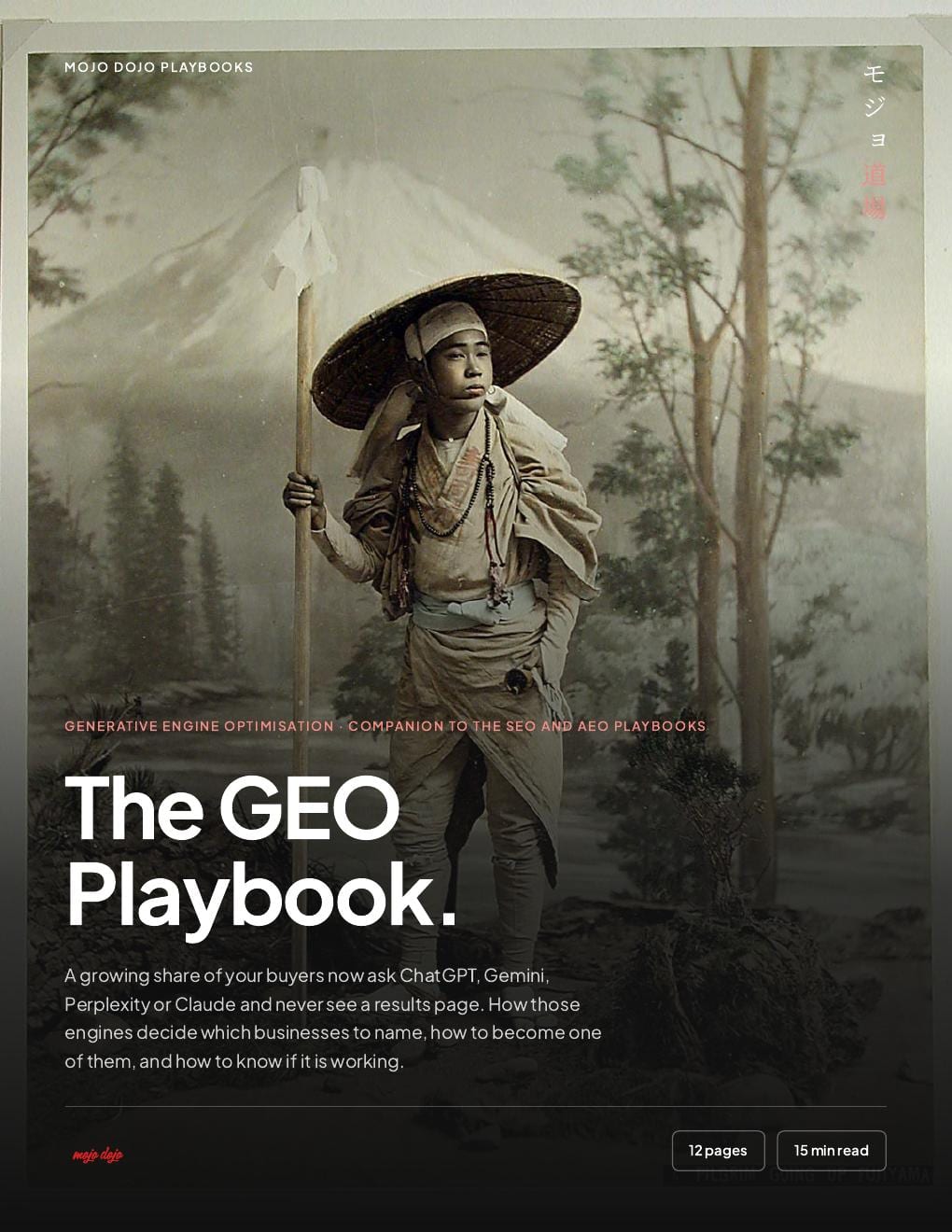
Free. 12 pages · 15 min read. In your inbox. Magic-link delivery, it arrives in about two minutes, and there's no sales call attached to reading it.
Do you work with New York businesses?
Yes, remotely. Strategy sessions and monthly reviews happen over video calls on Eastern Time, and shared reporting shows every prompt test, fix and result, so the work runs smoothly without in-person meetings.
What is AI SEO?
AI SEO is the work of making your business visible in AI-generated answers from Google AI Overviews, ChatGPT, Perplexity, Gemini, Copilot and Claude. It is also called GEO or AEO. The term is also used for using AI tools inside SEO work. We do both, with an expert reviewing everything before it goes live.
Is GEO the same as SEO?
No, but they overlap heavily. GEO (generative engine optimization) focuses on being cited and recommended in AI answers. It relies on the same foundations as SEO: crawlable pages, useful content, structured data and authority. It adds answer-first writing, entity consistency and measurement of citations. Weak SEO fundamentals will hold GEO back.
How do I get my content into AI Overviews or ChatGPT answers?
No one can guarantee inclusion, because each assistant picks its own sources. You improve your odds by letting AI crawlers reach your pages, putting a clear direct answer near the top of each page, backing claims with figures and sources, adding schema markup, and earning links and mentions from other credible sites. Then test real buyer questions regularly to see what changes.
Is AI search really changing how people find businesses?
Yes, and the change shows up in our own data as well as the industry's. On mojodojo.io, AI crawlers accounted for 35.0% of bot visits over 30 days, level with search engines, across 240,060 visits from 24 bots. Buyers are asking longer questions and getting written answers, so being named in the answer matters as well as ranking. Classic search is still very large, which is why we build on both.
What results can I expect from AI SEO?
Expect better coverage, more accurate answers about your business and more citations and mentions for the questions that matter to your buyers, alongside stronger organic performance. We do not promise a fixed ranking or citation count. For a sense of the underlying SEO results, see our published case studies, such as a 292% increase in organic traffic for ARP Engineering and a 438% increase in organic keywords for Loan Gallery Finance.
Can AI SEO drive traffic and leads?
It can, but the pattern differs from classic search. Some searches now end inside the answer without a click, so we track citations and brand mentions as well as visits. Visitors who do arrive from AI assistants have often done much of their research already. We segment AI referrals in analytics so leads from that channel can be counted, not guessed.
How do you measure success in AI SEO?
We set a baseline of real buyer prompts across the major assistants, then track how often you are cited or named, how accurate the answers are, and how you compare with competitors. Alongside that we report AI referral traffic, organic rankings, conversions and revenue. Only 9% of the companies in our State of B2B AI Visibility 2026 audit actively measure AI referrals, so this alone is a gap most businesses can close.
How long does AI SEO take in a market this competitive?
Technical and content fixes can be picked up within weeks, and narrower prompts, such as a niche service or a single neighborhood, often move first. Broad city-wide prompts dominated by national brands take longer, because they depend on authority built over months. We report monthly so you can see which questions are moving.
How long does AI SEO take?
Technical and content fixes can be picked up by crawlers within days to weeks, and early movement in prompt testing often shows within the first few months. Building authority takes longer, in the same way as SEO. We report monthly so you can see progress on each stage instead of waiting for one large result.
Why is brand authority so important in AI search?
AI systems try to avoid naming unreliable sources. They look for signals that others vouch for you, such as relevant links, consistent business details, reviews and mentions. A page with the right answer but no outside corroboration is easier to skip. That is why our AI SEO work includes digital PR and brand consistency, not only on-page changes.
Which businesses benefit most from AI SEO?
Businesses whose buyers research before they get in touch, such as B2B and professional services, software, healthcare, finance, ecommerce and high-consideration local services. If your customers ask questions before they buy, they are likely asking an AI tool. It is a weaker fit for businesses with no website content to build on, where we would start with the SEO foundations first.
Should I block AI crawlers?
It depends on your goals. Blocking tools such as GPTBot or ClaudeBot in robots.txt keeps your content out of those systems, which also removes the chance of being cited by them. If visibility in AI answers matters to you, allow the crawlers you want and keep sensitive or paid content protected. We review this as part of the technical audit and agree the policy with you.
Should we publish in languages other than English?
If your customers use them, yes. Nearly half of residents aged 5 and over speak another language at home. Assistants answer in the language they are asked and prefer sources in that language, so professionally translated, reviewed pages can put you in answers where few competitors appear.
What makes Mojo Dojo different from other AI SEO agencies?
We publish our own data instead of quoting borrowed benchmarks, including an audit of 719 B2B companies and the bot logs from our own site. We have more than 15 years in SEO, so AI work sits on proven foundations. And we are open about limits: no citation guarantees, and an expert reviews every AI-assisted deliverable.
Get your free AI visibility audit.
Send us your website and we will test how AI assistants describe your business, check which of their crawlers can reach it and list the competitors they cite instead. The written findings land within 48 hours, with no calls and no obligation.