


Google Ads Agency in Wellington
Wellington Google Ads built for government, creative and tech buyers with long approval chains. Procurement here rewards credibility over volume, so we run Search and remarketing that stays in front of decision makers through the entire evaluation.
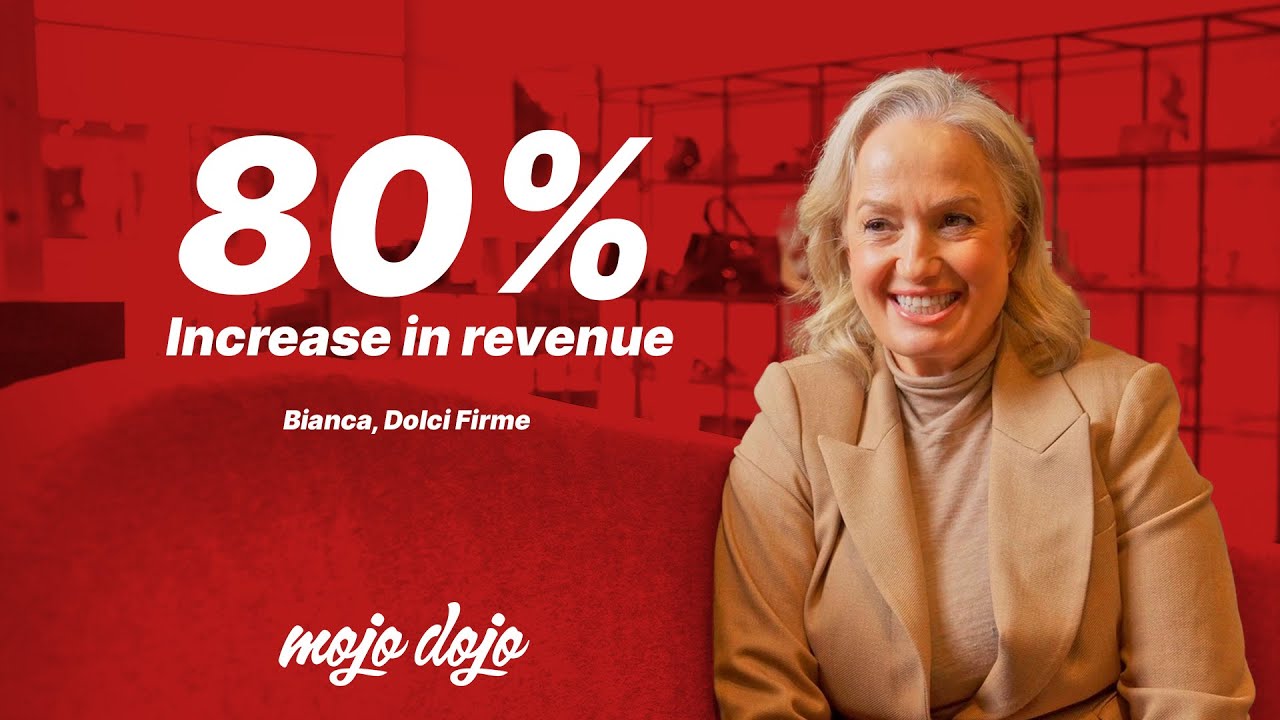
Real Mojo Dojo clients, on the record.
Google Ads in the capital after the public sector cuts.
The capital's economy has been through a hard reset. Data compiled by economist Shamubeel Eaqub and reported by RNZ in December 2024 showed the city had lost 19,430 jobs, 11.6%, in a year, while about 10,000 public sector roles were cut nationally. Cafes, retailers, consultancies and contractors that once relied on government workers and contracts have had to find customers elsewhere, and that is exactly the job paid search is good at: putting you in front of people who are already looking, wherever they are.
The underlying market is still wealthy and well educated. The region had the highest GDP per capita in the country in the year ended March 2024, and professional, scientific and technical services was its largest industry, ahead of public administration and finance. Buyers here read closely and expect evidence. Ads that promise the world and landing pages full of hype tend to lose to plain, specific copy.
Geography matters too. Harbour and hills split the region into separate catchments, the city itself, the Hutt Valley, Porirua, Kāpiti and the Wairarapa, and people search for the place they want by name. In 2025 Lower Hutt and Masterton grew while the city shrank, so suburban catchments deserve their own tests. If you already advertise, a Google Ads audit will show where spend is drifting. For how ads fit with organic, see our SEO service and our other PPC management services.
For the wider picture across the country, see Google Ads New Zealand. We also provide Google Ads in Auckland. Related Wellington services include PPC Management, Facebook Ads and SEO. Explore the full range of Wellington services.
Google Ads in Wellington: the market in figures.
Sourced numbers on the region's size, wealth and recent shake-up. Each card names its source.
Industries we help in Wellington.
The sectors that shape the capital's economy, and the Google Ads approach that suits each.
Professional and advisory services
The region's largest industry by GDP. Consultancies, law firms and policy advisers now chase private sector work as well as government contracts. We build Search on specific services, exclude job and tender-portal noise, and import signed-client data so bidding learns what a good lead looks like.
Government suppliers
Firms that sold mainly into the public sector need new buyers. We use Search to test demand in private sector niches quickly, and remarketing and YouTube to stay visible through the long approval chains both sectors share.
Finance and insurance
One of the three largest industries by regional GDP. Advisers, brokers and insurers get compliant ad copy, brand and product campaigns kept apart, and reporting on cost per application rather than cost per click.
Technology and software
Software and digital firms sell to buyers who expect data. We run Search on problem and category terms, competitor comparisons where policy allows, and trial or demo conversion tracking tied to pipeline.
Screen and creative industries
The region had 1,698 screen sector firms in 2021. Production, post-production and visual effects studios sell to international clients, so campaigns target overseas markets and specialist terms rather than local foot traffic.
Hospitality and events
Major events drew 1.07 million attendees to the region in 2023-24. Cafes, bars and accommodation get Search and Performance Max timed to Wellington On a Plate in August and WOW in spring.
See whether your Wellington Google Ads still match your customers
Book a strategy session and we will review your targeting, search terms and conversion tracking, and show you where spend no longer matches the buyers you want.
Paid results from published client work.
Outcomes from our Google Ads case studies, most of them for Australian businesses. Every account is different, and these are not promises.
Where Google Ads spend goes to waste.
The six leaks we find in most accounts, plus two that matter in a region split into separate catchments with a shrinking city centre.
Conversions are counted wrongly
Duplicate conversion actions, reloaded thank-you pages and missing call tracking make an account look better or worse than it is, and Smart Bidding then learns from bad data.
Measurement is fixed first
We audit every conversion action, remove duplicates, add call and form tracking through Google Tag Manager and feed real lead or sale value back to Google where we can.
Ads show for the wrong searches
Broad and phrase match can trigger ads on loosely related queries, so budget goes to clicks that were never going to buy.
Search terms reviewed continually
We mine search term reports, add negative keywords, tighten match types and keep watching close variants, so spend follows real intent.
Only the CBD is targeted
Many accounts still point all their budget at the central city, where fewer people now work, while the Hutt Valley, Porirua and Kāpiti get little or none.
Each catchment tested separately
We set up location groups for each catchment, compare cost per lead across them, and shift budget to wherever customers are converting.
Brand searches flatter the results
Brand terms convert cheaply, and when they share a campaign with generic terms the average hides what new customers really cost.
Brand and non-brand kept apart
We separate brand from non-brand so you can see the true cost of winning a customer who did not already know you.
Automation with no guardrails
Performance Max can spend across every Google channel while reporting little about where the money went, especially with weak assets and vague goals.
Performance Max with signals and limits
We build it with clear conversion goals, strong assets, audience signals and brand exclusions, then review channel and search category reports.
Campaigns still aimed at the old customer
Keyword lists and ads written for government buyers or CBD office workers keep spending even after that demand has fallen away.
Keywords rebuilt around new buyers
We review search terms and conversions from the last year, retire what no longer converts, and build new ad groups around the buyers you are now trying to win.
Clicks sent to the homepage
Landing page experience feeds Quality Score, and a generic page loses buyers who came for something specific.
A page for every campaign theme
We match each campaign to a focused page and test headlines, forms and layouts with our conversion rate optimisation team.
Bid strategy chosen too early
Target CPA or target ROAS set before an account has enough conversions leaves Google's models guessing.
Strategy follows the data
We start conservatively, collect clean conversion data and move to automated bidding as volume allows.
Google Ads campaign types we manage.
We choose the mix from your margins and buyers. A Cuba Street restaurant might lean on Performance Max and Maps, a policy consultancy on precise Search and remarketing.
Search campaigns
Capture people already searching for what you sell, with full control of keywords, match types, negatives and ad copy.
Shopping campaigns
Product feeds and campaigns for online stores, with feed clean-up and margin-based structure. See Google Shopping Ads.
Performance Max
One campaign across Search, Shopping, YouTube, Display, Discover, Gmail and Maps, built with the right asset groups and audience signals. See Performance Max.
Display and Demand Gen
Visual reach and prospecting for audiences earlier in the buying journey. See Google Display Ads.
Remarketing
Audiences built from real site behaviour to win back visitors who did not convert. See Google remarketing.
Get your free Google Ads audit.
Send us your website and within 48 hours we will return a Google Ads audit on your targeting, search terms and tracking, in plain English. No calls, no obligations.
Our Google ads management results
Google ads performance is based on three factors: ad text relevance, user search term to ad relevance & landing page relevance.
Higher ad quality generally leads to better performance.
This improvement in performance is measured as better ad positions and lower cost per click.
Let us show you how…
A prominent audio visual company returned $25 for every dollar spent. For a meager spend of $1800, the campaign generated $47,000 in revenue.
A prominent linen manufacturer with a $8.91 return for every $1 spent on ads. A $63K in revenue from Google ads based on a $7K spend.
A prominent cooking business returned $12.89 for every dollar spent. A 12.89 ROAS and a $13,000 return for a simple $1000 ad spend.
A very prominent collectibles company returning $171K for a $5600 in spend. A return of $30 for every dollar spent.
Another catering company having a $21 return for every dollar spent. A revenue of $170,000 for a spend of $7700.
And if you think, we don’t even have that kind of ad spend.
Would this even work for us ?
Here is a shot from a cleaning business that obtained a lead for every $11.45.
Just for a $2800 spend, they managed to have 250 leads.
How Google chooses which ads appear.
Each time someone searches, Google runs an auction to decide which ads appear and in what order. Position depends on Ad Rank, which combines your bid with the quality of your ads and landing page and the context of the search. That is why the highest bidder does not always win, and why a relevant ad on a fast page can cost less per click than a poor one.
Quality Score, a 1 to 10 diagnostic in the account, shows how well your keyword, ad and landing page fit together through expected click-through rate, ad relevance and landing page experience. We treat it as a guide, not a goal. The goal is profitable customers.
Smart Bidding strategies such as Maximise conversions, Target CPA and Target ROAS use auction-time signals that no person could adjust by hand. They are only as good as the conversion data you feed them, which is why we fix tracking first and pick each strategy for where an account is in its life.
For a smaller regional market this is encouraging. Fewer advertisers compete on many local terms, so a precise, well-written ad and a fast, specific page often buy a top position for less than a national brand pays for a generic one.
What our Google Ads management includes.
Twelve disciplines that work as one system, with plain-English reporting you could forward to a board.
Account and tracking audit. A full review of any existing account, conversion actions and data quality before budget moves.
Keyword and competitor research. Intent-led research into the searches most likely to become customers and how competitors show up for them.
Account structure. Campaigns split by budget, network and intent, with tightly themed ad groups so keyword, ad and landing page stay relevant.
Ad copy and asset testing. Headlines, descriptions and assets written for the searcher and tested against each other, with every result logged.
Bid strategy and budget control. Manual and Smart Bidding chosen for the stage of the account, with budgets and pacing set against your targets.
Search term and negative keyword control. Ongoing removal of wasted queries and protection of your brand terms.
Performance Max management. Asset groups, audience signals, conversion goals and exclusions set up so Google's automation aims at outcomes that matter.
Shopping feed optimisation. Titles, images, categories and margin labels improved so products win the right auctions.
Remarketing audiences. Full-funnel lists for middle and bottom of funnel visitors, with messaging matched to where they are in the buying journey.
Landing page recommendations. Pages reviewed for message match, speed and form friction, with testing alongside our CRO team.
Conversion and call tracking. Form, call and sales tracking set up and checked so reported results can be trusted.
Reporting and review. Weekly snapshots and a monthly review of leads, revenue, ROAS and next steps.
How we launch and improve your Google Ads.
Six stages, all delivered remotely. We explain each change in plain language on video calls and in the shared reports.
Account audit
If you have an existing account, we identify wasted spend, structural issues, missing conversion tracking and untapped opportunities. New accounts start with competitor and keyword research.
Strategy and build
Campaign architecture designed around your goals, with ad copy written, landing pages reviewed and tracking verified before a single dollar of budget goes live.
Launch and data gathering
Campaigns go live. The first weeks focus on collecting search terms, device performance and audience behaviour, with bidding kept conservative until conversion data builds.
Learning phase review
Once Google's bidding models have enough data, we check that the strategy is stabilising and move to automated bidding where the numbers support it.
Optimise and scale
Regular cycles of bid adjustments, copy testing, landing page improvements, audience expansion and budget scaling. Every change is logged and measured against a clear benchmark.
Reporting and review
Weekly snapshots and a monthly deep-dive on leads, revenue and return on ad spend, then a plan for the month ahead.
When to push spend in the capital.
The event calendar drives hospitality demand. Wellington On a Plate and Beervana delivered a $10 million boost to the capital's economy in August 2025. CubaDupa filled the Cuba Quarter with 324 performances across 41 stages in late March 2025, and WOW contributed $31.75 million to the region in 2024, with 64% of ticket holders coming from elsewhere.
For cafes, bars and accommodation we raise budgets a few weeks ahead of each, write event-specific ads, and target visitors planning trips as well as locals. Spend comes back down as soon as the event ends.
B2B firms follow the financial year. Most New Zealand businesses have a 31 March balance date, so budget and accounting searches cluster from February to April. Retailers should weight spend to October to December, when nearly 30% of the country's online spending happens.
Google Ads and SEO, run together.
Google Ads buys visibility now. SEO earns it over months and carries no cost per click. Paid search shows which keywords and messages convert, and that data tells the organic programme where to aim. Organic rankings in turn lower your dependence on paid clicks over time.
The same goes for other channels. If your buyers also spend time on social platforms, our Facebook Ads team can run them under one reporting view, and our PPC management services cover every paid platform together. For sites that already send traffic but convert poorly, conversion rate optimisation often lifts results faster than more spend.
When a customer base changes quickly, as it has for many firms here since 2024, paid search is the faster way to test new markets. The terms that convert then show the organic programme which new pages are worth building.
Areas we serve in Wellington.
We work with businesses in every part of the region, all of it remotely. In the city that includes the central business district and Lambton Quay, Thorndon, Te Aro, Kelburn, Newtown, Kilbirnie, Miramar and Island Bay, and further out Karori, Johnsonville, Khandallah and Tawa.
Beyond the city boundary we cover Lower Hutt, Petone and Eastbourne, Upper Hutt, Porirua, Paraparaumu on the Kāpiti Coast and Masterton in the Wairarapa. We write place names with their correct macrons, and target each campaign to the catchments you serve.
Selected Google Ads results.
Published paid media outcomes, mostly with Australian clients. They illustrate our method rather than results in any one city.

Bfree
1000% Increase in Sales
House & Trade Supplies
118% increase in Organic Revenue

downies collectables
105% Increase in Paid Traffic

Linen House
109% Increase in Paid Revenue
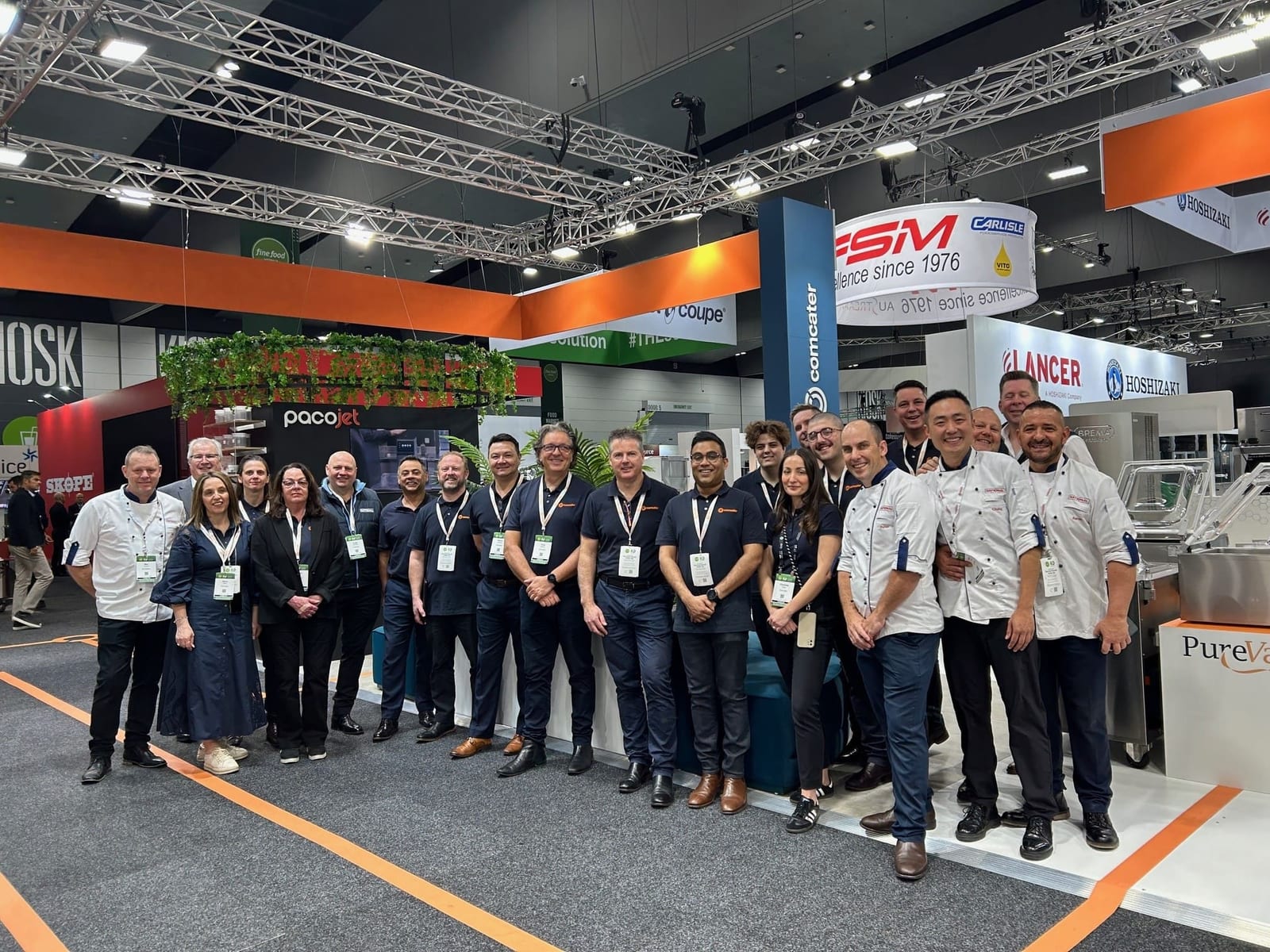
Comcater
54% Increase in New Users

Arise Solar
700% Increase In Brand Searches
“Their team understood our business before we even had to explain it. Enquiries are up 250% and the quality is better than ever.”
Outsmart competitors instead of outspending them.
What nine years and $32 million of Google Ads taught us about outsmarting competitors instead of outspending them. One client, five ideas that transfer to any account.
Send me the PPC Playbook →
Free. 12 pages, 14 min read. In your inbox. Magic-link delivery, it arrives in about two minutes, and there's no sales call attached to reading it.
What does a Google Ads management agency do?
It plans, builds, runs and reports on your Google Ads account. That covers keyword and audience research, account structure, ad copy, bidding, conversion tracking, landing page advice and regular reporting, so that ad spend is judged on leads and revenue rather than clicks.
Do you work with Wellington businesses?
Yes, remotely. Kick-off and review sessions happen on video calls, and you have shared reporting that shows spend, conversions and search terms at any time. We work inside your own Google Ads account, so every change is visible and stays yours.
How long does it take to see results from Google Ads?
Unlike SEO, Google Ads produces traffic from day one. It typically takes 30 to 60 days for an account to exit the learning phase and for bidding strategies to stabilise. The first 30 days are data gathering, days 30 to 90 are optimisation, and by month three or four you should have a clear picture of your true cost per lead or ROAS at scale. Accounts with existing conversion history tend to accelerate faster than new ones.
What is a good ROAS for Google Ads?
It depends on your margins. A business with high gross margins can be profitable at a modest return on ad spend, while a business with thin margins needs a much higher one just to break even. The useful question is not what a good ROAS is but what your break-even ROAS is and what you need to hit your growth targets. We calculate that with you before setting bidding targets. For a real example, Downies Collectables grew ROAS by 1209% while ad spend rose 387%.
What is Performance Max and should I use it?
Performance Max is Google's automated campaign type that runs across Search, Shopping, YouTube, Display, Discover, Gmail and Maps from a single campaign. It works well when it is fed strong first-party audience signals, quality assets and clear conversion goals, and it wastes budget when it is not. We use it for most ecommerce clients. For lead generation we are more selective, because quality control needs more active management than Search alone. See our Performance Max service.
Which Google Ads campaign types do you manage?
Search, Shopping, Performance Max, Display, YouTube video, Demand Gen and remarketing. We recommend a mix after learning your margins, sales cycle and buyers rather than a fixed package.
Our government work has dried up. Can Google Ads help find private sector clients?
It is one of the quickest ways to test that. We build small Search campaigns around the private sector services you want to sell, measure which ones produce qualified enquiries, and scale the winners. Because you only pay for clicks, you learn what the market wants before committing to a full rebrand or new website.
How do you measure success?
By what the account returns to your business: leads, sales, revenue, cost per lead and ROAS. We verify conversion tracking first, including calls and form fills, so the numbers in reports can be trusted. You get weekly snapshots and a monthly review that compares results against the benchmark we set at the start.
Can you audit my existing Google Ads account?
Yes. We review conversion tracking, account structure, search terms, match types, bidding, ad copy and landing pages, then show you where money is being wasted and what to fix first. Ask for our Google Ads audit or use the free audit form on this page.
Do I own my Google Ads account?
Yes, always. We build campaigns inside your own Google Ads account, which you own and can access at any time. If we ever part ways, the campaign history, audiences and conversion data stay with you.
Do you manage both ecommerce and lead generation accounts?
Yes. Ecommerce accounts lean on Shopping and Performance Max with a clean product feed. Lead generation accounts lean on Search, call tracking and lead quality feedback so bidding aims at real enquiries rather than form spam.
Is Google Ads better than SEO?
Neither is better. Google Ads gives you visibility and data quickly and you control who sees the ad. SEO takes longer to build but adds durable visibility with no cost per click. Most businesses do best running both, each informing the other. Our guide to SEO vs PPC vs SEM goes through the trade-offs.
Should we advertise outside the city centre?
Usually, yes. The region is split into separate catchments, and in 2025 Lower Hutt and Masterton grew while the city shrank. We test the Hutt Valley, Porirua and Kāpiti as separate location groups and keep the ones that deliver leads at an acceptable cost.
Get your free Google Ads audit.
Send us your website and within 48 hours we will return a Google Ads audit on your targeting, search terms and tracking, in plain English. No calls, no obligations.